[…] Nobody has shown that El-Sayed knew about the posts. But TNT has covered El-Sayed’s record on the Muslim Brotherhood…

Written By TNT Staff, Posted on November 10, 2026
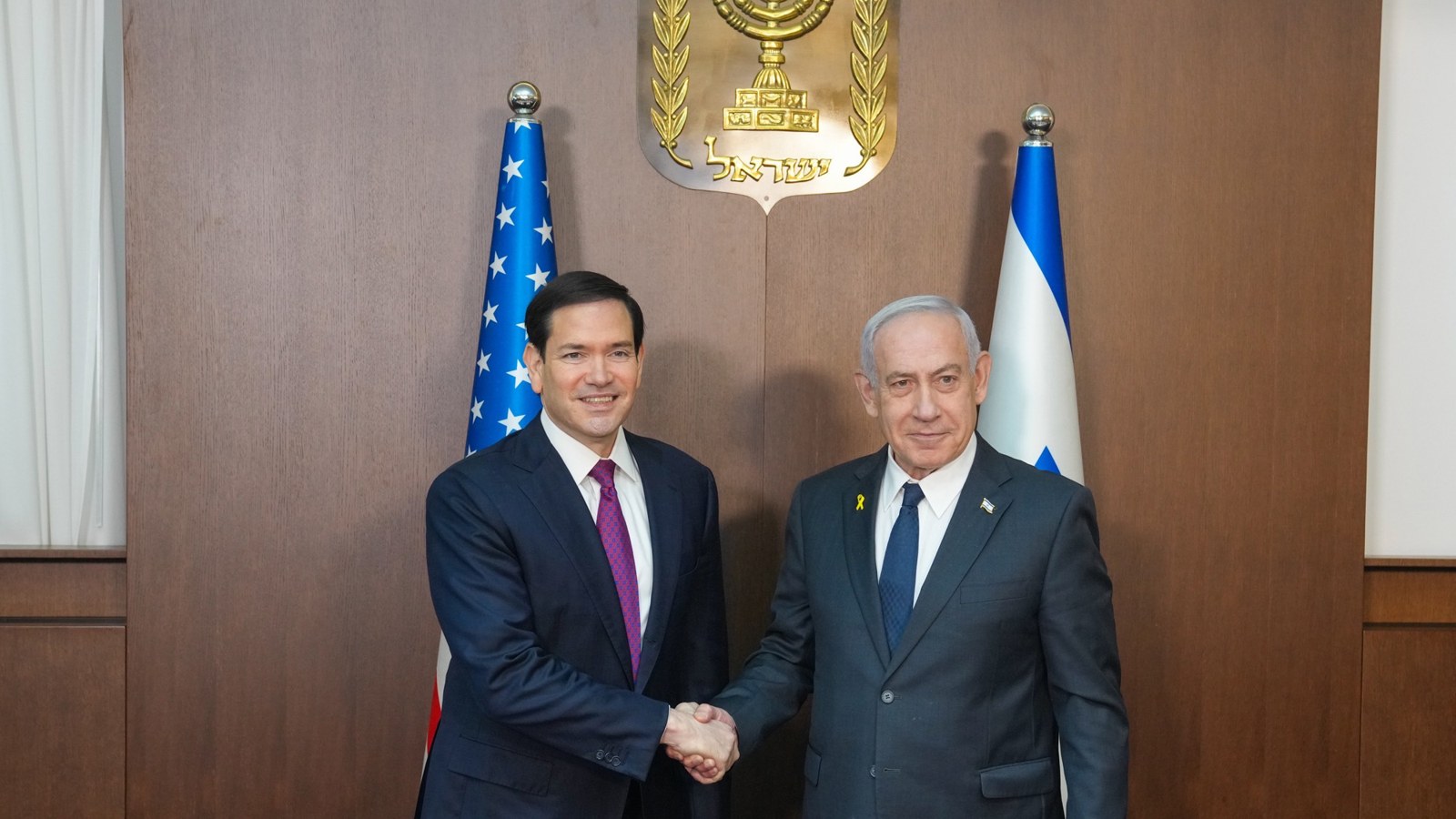
Secretary of State Marco Rubio says Israel no longer needs America to pay for its weapons. “The president’s expectation is that Israel is now prosperous and rich enough to be able to be a sales country,” Rubio told reporters at the G7 foreign ministers’ meeting in Paris on Monday, according to The Times of Israel. “They can buy the weapons from us, but we no longer have to provide the financing.” President Trump, he said, “would like for the financing portion to end as soon as possible.”
Asked whether Israel could pay for its own defense purchases starting in 2027, Rubio told the Jerusalem Post: “Well, that’s what the president said we’re going to do.” He added, “On the question of financing, I think Israel has clearly graduated beyond that,” and called it “something the Israelis themselves have offered us.”
The goal is right, and so is the word “graduated.” The timing is the problem.
On the morning of the Nov. 3 midterms, Trump told Fox & Friends, “I made a deal with Netanyahu that we’re going to stop giving Israel $4 billion a year,” Ynet reported. He said Prime Minister Benjamin Netanyahu “brought it up,” and tied the move to Michigan’s Senate race: “Why should we put up with El-Sayed’s nonsense when they don’t need it?” According to Ynet, neither Israel’s Defense Ministry nor its Finance Ministry had been told.
Netanyahu’s office answered on Friday with a careful statement. “The transition by Prime Minister Netanyahu and President Trump from assistance to partnership demonstrates the strength and sophistication of our relationship,” it said, adding, “Today, Israel has a strong and stable economy.” Israeli officials also told Ynet that “no final decision has been made,” and that the aim is a new agreement before the current Congress ends on Jan. 3, 2027.
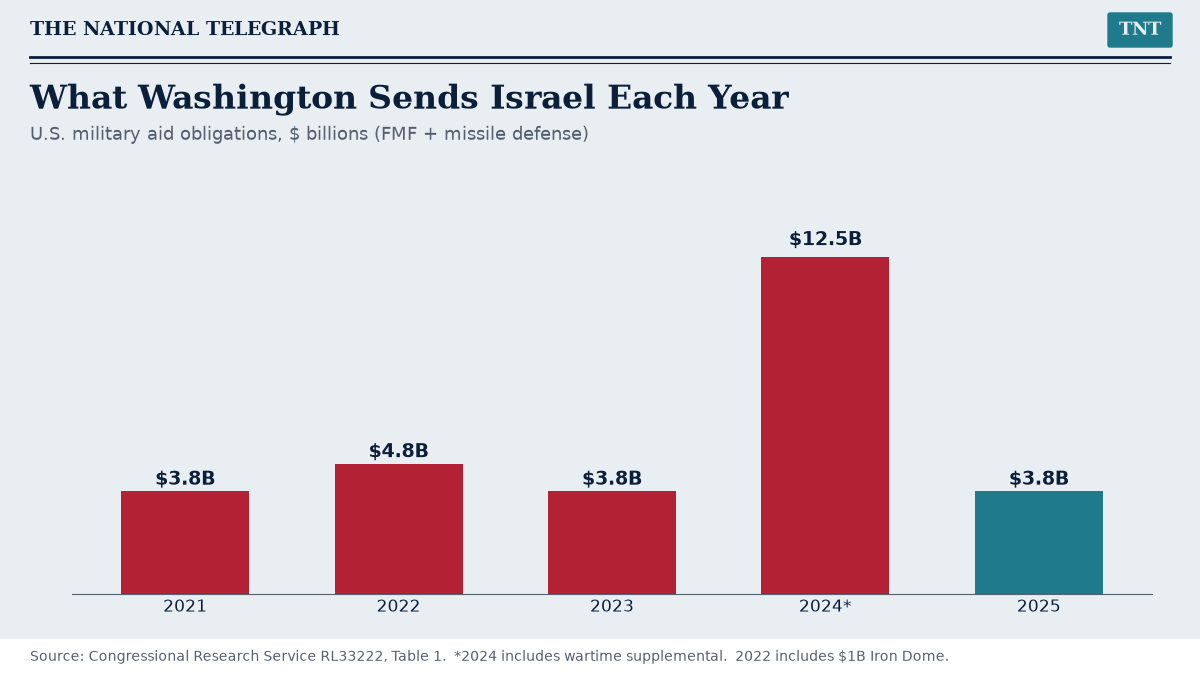
Under the 2016 memorandum of understanding, Washington pledged $38 billion over fiscal 2019 through 2028, subject to Congress: $33 billion in Foreign Military Financing grants and $5 billion for missile defense, according to the Congressional Research Service. In a normal year, that comes to $3.8 billion. CRS says the grants now cover only about 14% of Israel’s defense budget, which is a much smaller share than in past decades because Israel’s economy has grown. Israel’s defense spending hit 8.8% of GDP in 2024, and its defense companies sell to India, Europe and the Pentagon itself.
A country that builds Iron Dome, Arrow 3 and the helmets American F-35 pilots wear isn’t a charity case. Grant aid has long given Israel’s enemies and its American critics the same talking point: that Israel is a client living on U.S. taxpayers. Ending the grants takes that argument away. What remains is two allies buying from each other, building weapons together, and sharing intelligence against Iran. That’s a sturdier foundation than an annual appropriations fight. Netanyahu himself has said Israel needs to “wean ourselves off of American security aid,” CRS notes.
Israel’s weapons pipeline doesn’t run on cash up front. CRS explains that Israel uses “cash flow financing,” paying for big multiyear contracts with future grant money. Cut the grants off early and those payment schedules don’t go away. CRS warns that without a new MOU or appropriations, Israel would have to “pay for existing contracts with national funds, arrange other sources of external financing, or terminate ongoing contracts.”
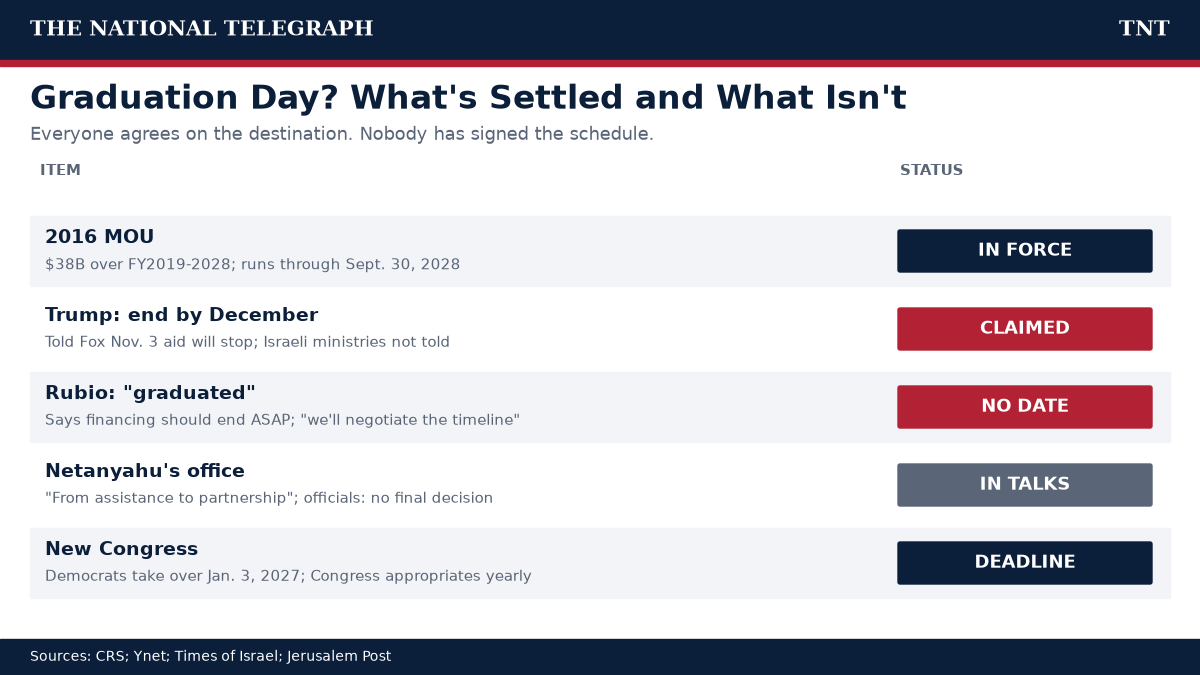
The calendar makes that worse. Democrats take both chambers in January, and Congress appropriates the money every year. A party whose incoming Senate class includes Abdul El-Sayed, who answered “Yes” when CNN asked whether Israel’s government is “just as evil as Hamas,” will hold the purse while the next MOU is written. Israeli outlets report that Jerusalem wants the deal done before then, and that one draft would keep financing near current levels for five years after 2028 before ending it. That’s a phase-out. “Ending by December” isn’t.
Israel is also between governments. President Isaac Herzog has asked Gadi Eisenkot to form the next coalition, so a deal Netanyahu negotiated this fall may be carried out by someone else. And Israel still faces Iran and its proxies on several fronts.
Tehran has noticed. Iranian Foreign Minister Abbas Araghchi seized on Trump’s post-election remark that voters dislike Israel, posting that “Americans are evidently sick and tired of Israel bamboozling US administrations into Forever Wars,” Iran International reported. Iran’s regime wants to see daylight between Washington and Jerusalem, and a rushed aid cutoff sold as a midterm talking point gives it some.
The fix is simple. Graduate Israel from grants on a written schedule, keep missile defense co-production fully funded, protect the contracts already signed, and lock it into the new MOU before Jan. 3. Rubio says, “We’ll negotiate the timeline.” He should negotiate one that ends the aid without leaving an ally exposed in the middle of a war.
Sources: The Times of Israel; Jerusalem Post; Ynet; Congressional Research Service; Iran International.

 November 10, 2026 November 10, 2026

Leave a Reply