[…] convicted of first-degree criminal sexual conduct after sexually assaulting a 10-year-old girl. ICE deported him in July. The same…
Written By TNT Staff, Posted on November 23, 2026
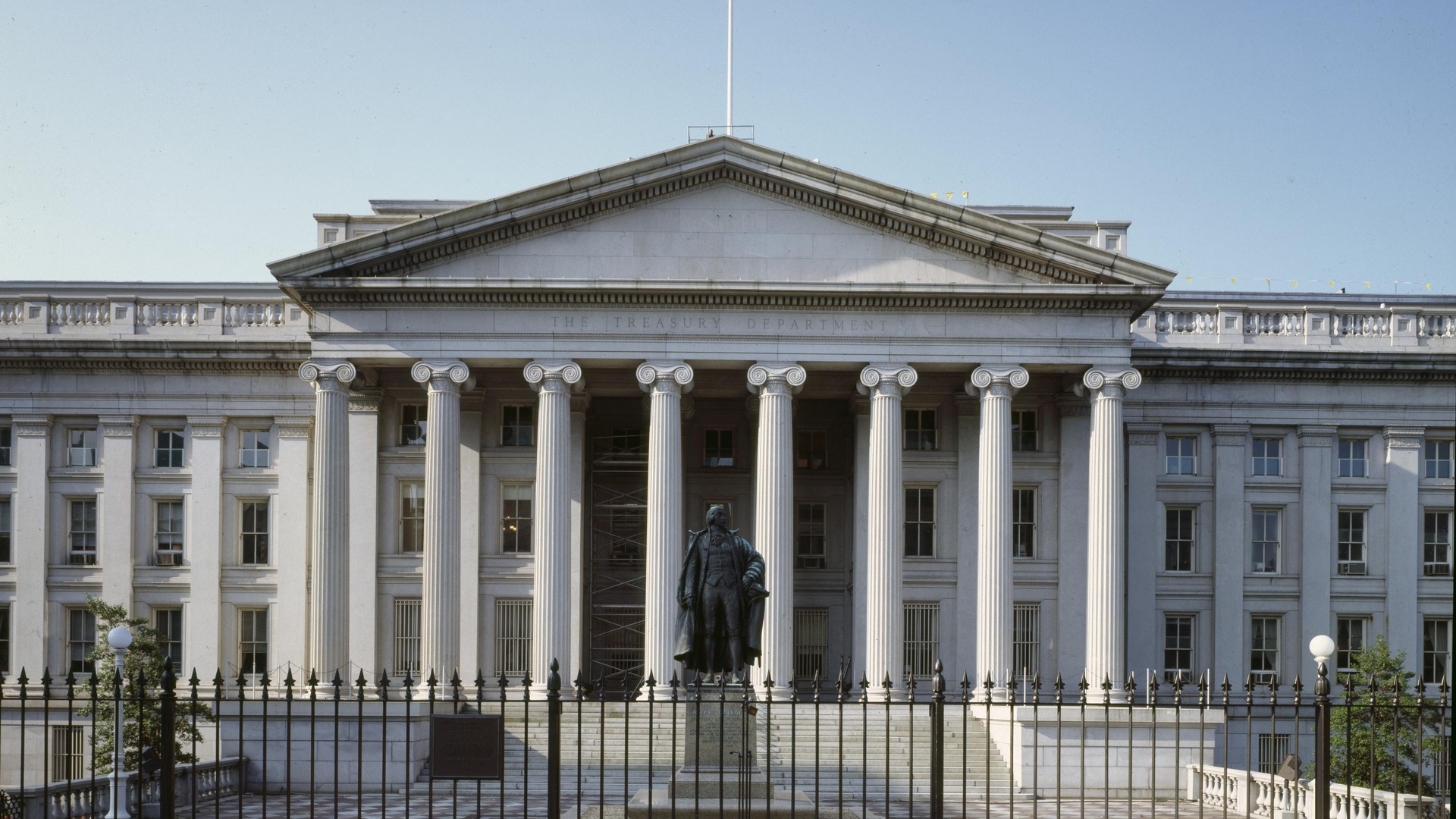
The Iranian regime is trying to collect billions of dollars from the insiders it trusted to sell its oil abroad. The Treasury Department says some of those “oil trustees” kept the money for themselves, and that the regime now has no oil left on the water outside the U.S. military blockade.
On Nov. 20, as part of Operation Economic Outcast, Treasury designated four regime insiders who, it said, helped sell Iranian oil and move the proceeds. “Iran’s tyrannical regime never fails to put its own interests before those of its own citizens, even as ordinary Iranians face shortages of bread and fuel,” Treasury Secretary Scott Bessent said. “The regime has exhausted its seaborne oil supply, and it may never see the revenue from the oil it has already sold. The ship is sinking.”
Treasury said there has been “no oil on the water outside of the U.S. military blockade and no oil loaded onto vessels since the start of Operation Economic Outcast.” It said the regime is trying to recoup billions of dollars from its oil trustees, and that “in many cases, these corrupt trustees have kept the oil revenue for personal gain.” Those are the department’s claims. The designations are financial sanctions, not criminal convictions.
Secretary Bessent announced Operation Economic Outcast on Aug. 24, 2026, a day Treasury dubbed Economic D-Day. The November release says the operation is “severing the remaining economic lifelines that sustain the Iranian regime.” Treasury said it has mapped the networks, facilitators, and financial channels Iran uses to smuggle oil, evade sanctions, and fund terror, and is working with partners across the U.S. government, the European Union, the United Kingdom, Gulf partners, and others.
The Nov. 20 designations were made under Executive Order 13902, which targets the Iranian petroleum, petrochemical, and aviation sectors, among other parts of the Iranian economy, and Executive Order 13224, as amended, a counterterrorism authority.
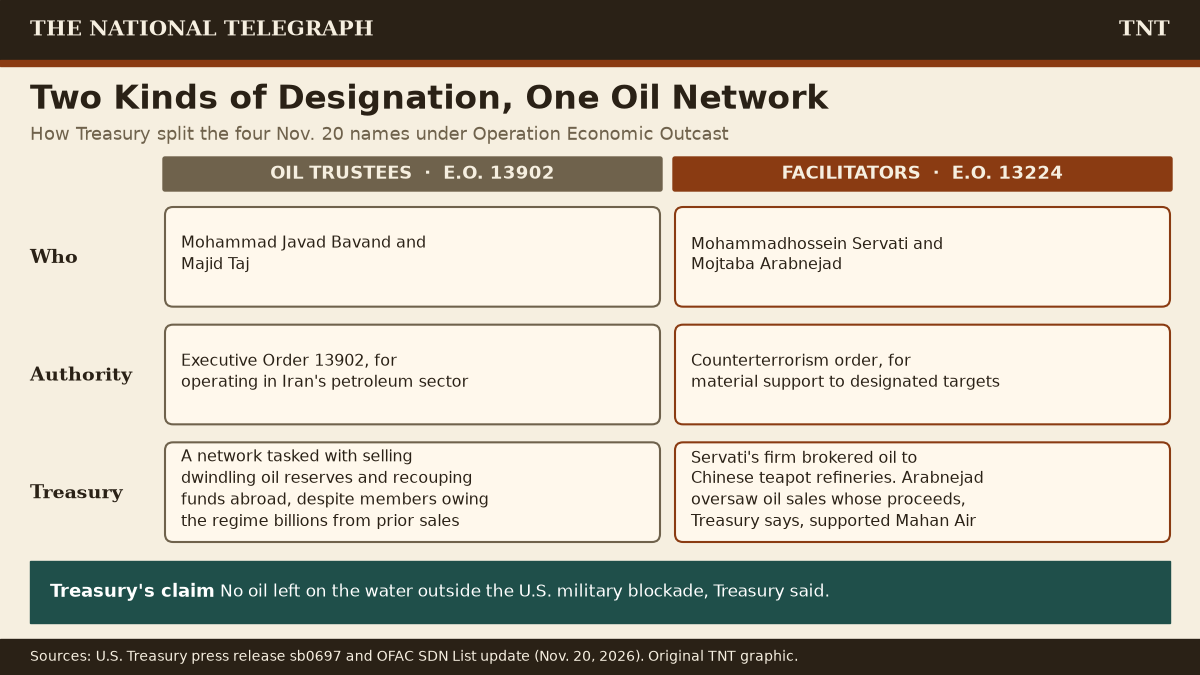
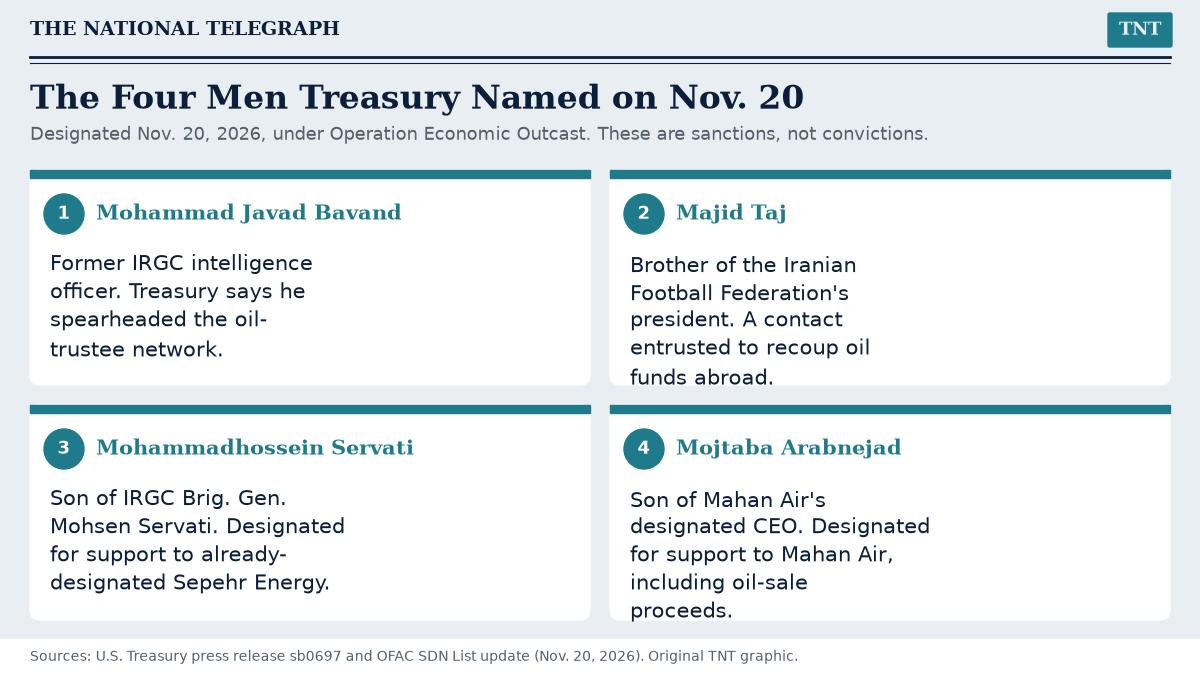
Treasury said Mohammad Javad Bavand, a former Islamic Revolutionary Guard Corps intelligence officer, and Majid Taj, the brother of the Iranian Football Federation’s president, operate in a network of regime insiders tasked with raising cash by selling from Iran’s dwindling oil reserves. Bavand, the department said, has spearheaded that effort and entrusted personal contacts, including Taj, to recoup Iran’s oil funds located in third countries. The regime has kept using that network, Treasury said, “despite members owing billions of dollars to the regime from previous sales.” Bavand has also worked with illicit oil-trading actors, including the IRGC and Sepehr Energy Jahan Nama Pars Company, a U.S.-designated front company tasked with selling oil for the Iranian Armed Forces General Staff. Bavand and Taj were designated under Executive Order 13902 for operating in the petroleum sector of the Iranian economy.
The other two names are tied to already-designated institutions. Mohammadhossein Servati is the son of IRGC Brigadier General Mohsen Servati. Treasury said he has held executive positions at companies operated by Sepehr Energy, including the front company Xin Rui Jin Trad Co., Limited, and Sepehr Energy Hamta Pars, a Sepehr Energy subsidiary. Xin Rui Jin, Treasury said, brokered and received shipments of Iranian oil on behalf of Sepehr Energy for delivery to Chinese teapot refineries. Servati was designated under Executive Order 13224, as amended, for providing material support to Sepehr Energy. The SDN List update also records an alias, Mohammad Hosein Sarvati, and a Dominica passport alongside an Iranian one.
Mojtaba Arabnejad is the son of Hamid Arabnejad, whom Treasury identified as the designated Iranian businessman and CEO of Mahan Air. Using familial ties and special connections with the Islamic Revolutionary Guard Corps-Qods Force, Treasury said, Mojtaba has been involved in purchasing aircraft parts for Mahan Air and procuring weapons for the Iranian military “under the auspices of agricultural companies.” Like the others designated on Nov. 20, he has overseen oil sales for the regime, “the proceeds from which have supported Mahan Air.” He was designated under Executive Order 13224, as amended, for providing material support to Mahan Air.
The Office of Foreign Assets Control added all four men to the Specially Designated Nationals and Blocked Persons List on Nov. 20. Property and interests in property of the designated people that are in the United States or in the possession of Americans are blocked. Americans are generally barred from dealing with them, and any entity they own 50 percent or more is also blocked.
Treasury’s account is blunt. The oil that funds the regime is not getting out. The money from oil already sold may never come back. And some of the men trusted to collect it were, the department says, taking a cut. Their names are now on the list.
Sources: U.S. Department of the Treasury, “Operation Economic Outcast Targets Corrupt Regime Insiders Exploiting Iran’s Oil Sector for Personal Gain” (sb0697, Nov. 20, 2026); OFAC Recent Actions and SDN List update, Nov. 20, 2026; U.S. Department of the Treasury, “Treasury Launches Unprecedented Campaign Against Iranian Regime on Economic D-Day” (sb0613, Aug. 24, 2026).

 November 23, 2026
 November 23, 2026
Leave a Reply