[…] convicted of first-degree criminal sexual conduct after sexually assaulting a 10-year-old girl. ICE deported him in July. The same…

Written By TNT Staff, Posted on November 23, 2026
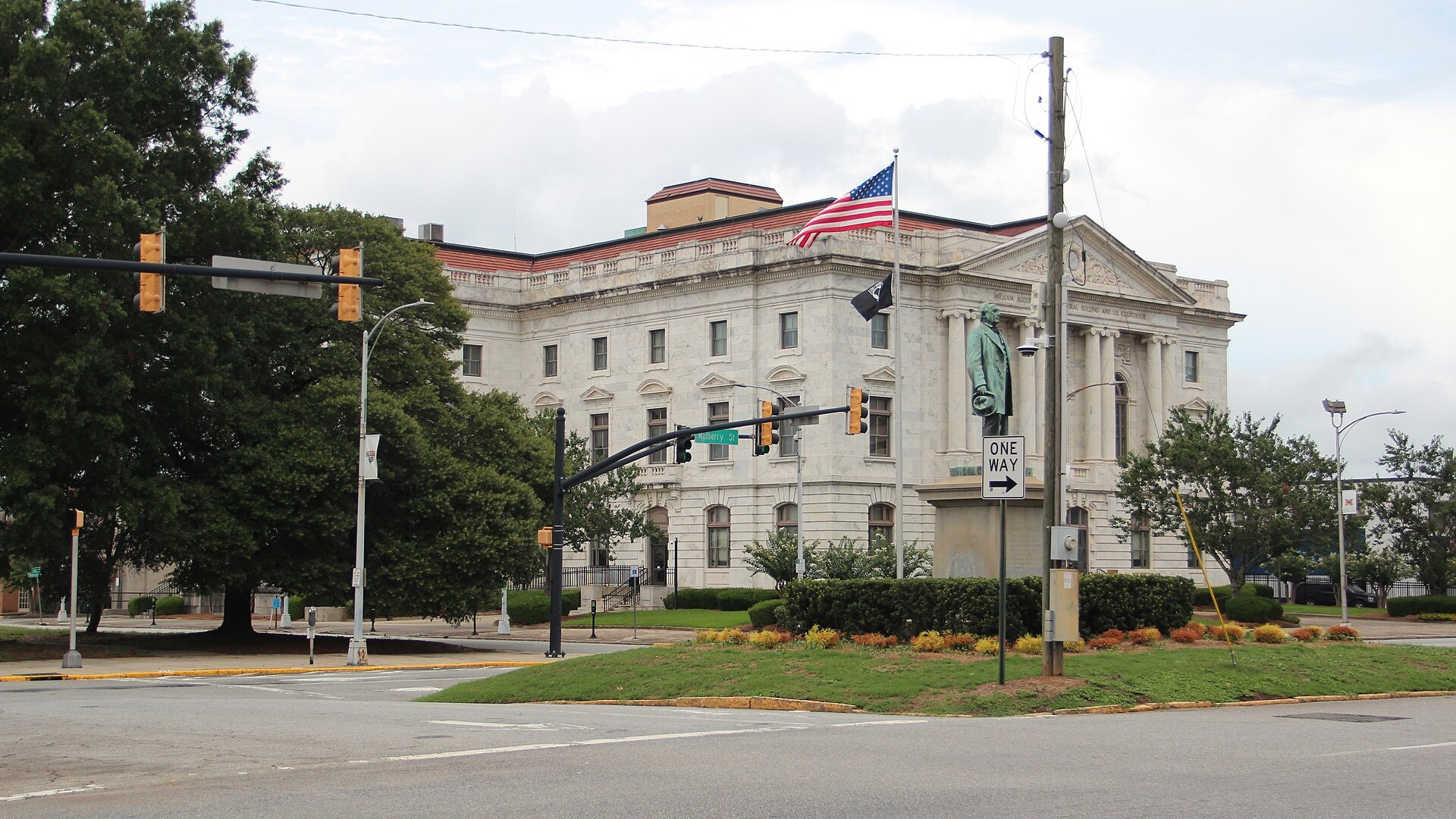
A Lavonia, Georgia, man is in federal custody, accused of sending more than $26,000 to people and groups tied to ISIS, then trying to destroy the evidence. His detention and preliminary hearings are scheduled today in Macon.
Younes Moustafa Younes, 34, of Lavonia, was charged by criminal complaint with one count of international money laundering and one count of destruction of evidence. The Justice Department said the FBI investigated allegations that he sent more than $26,000 to individuals and groups affiliated with the Islamic State of Iraq and al Sham, a designated foreign terrorist organization. He made his initial appearance on Nov. 19 before U.S. Magistrate Judge Charles Weigle and has remained in federal custody pending today’s hearings.
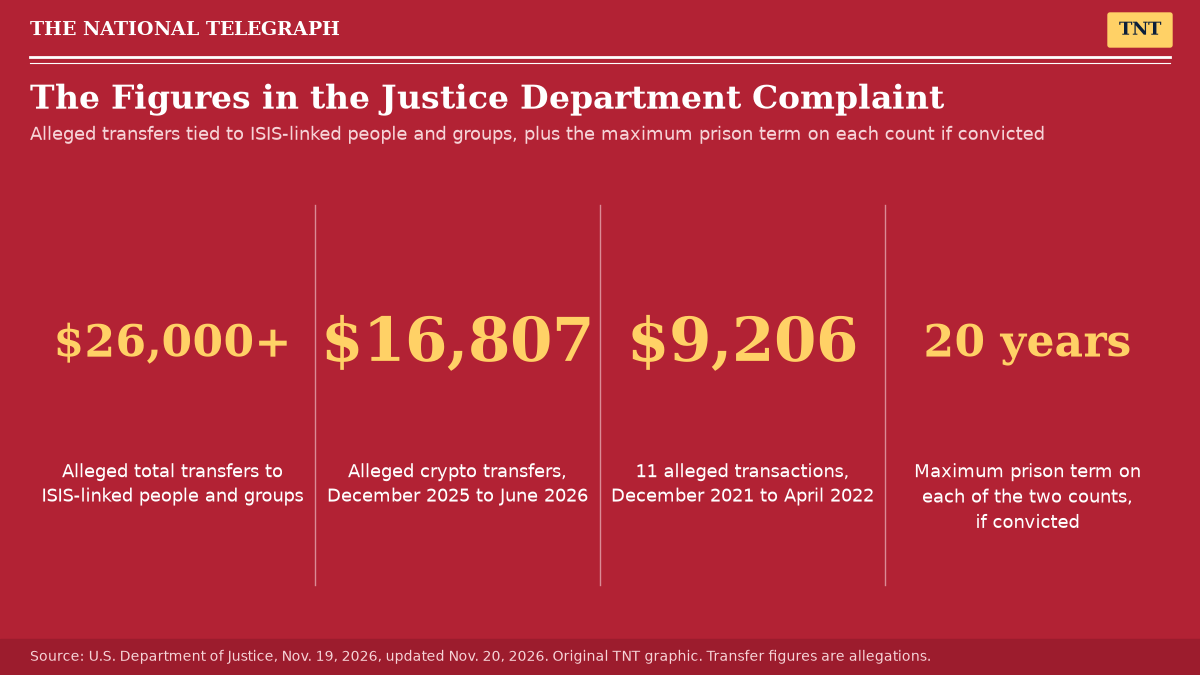
If convicted, Younes faces a maximum of 20 years in prison, three years of supervised release, and a $500,000 fine on the money-laundering count, and a maximum of 20 years in prison, three years of supervised release, and a $250,000 fine on the destruction-of-evidence count. A complaint is a set of allegations. He is presumed innocent unless a court finds otherwise.
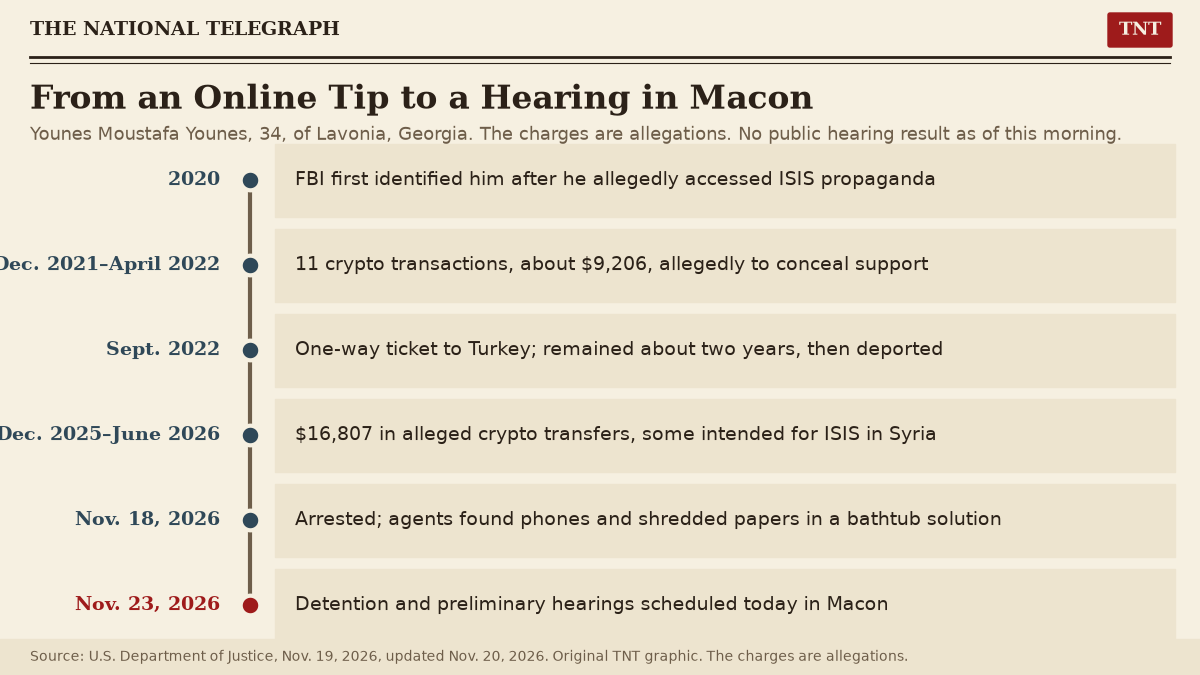
According to the complaint, Younes sent $16,807 through cryptocurrency transactions between December 2025 and June 2026, using multiple phone numbers and accounts intended to conceal his identity. Investigators allege that at least some of the funds were intended to promote the efforts of ISIS in Syria.
The complaint further alleges that, in 11 separate transactions between December 2021 and April 2022, he sent about $9,206 to cryptocurrency addresses associated with that effort, using an alias to conceal his support. Those two sums are how the department reaches its figure of more than $26,000. The announcement also included alleged images of Younes captured by cryptocurrency ATMs on March 10, 2022, and May 6, 2026.
Younes is also alleged to have altered and destroyed evidence up until his arrest on Nov. 18, when FBI Atlanta agents executed warrants to search his apartment, car, electronic devices, and workplace. Agents found three cellular phones submerged in an unknown solution inside his Lavonia apartment, including one device that was smashed and another with its identification number removed. They also found shredded documents submerged in an unknown solution in a bathtub. The department released photographs of those items with the announcement.
The FBI first identified Younes in 2020 after he allegedly accessed ISIS propaganda online. When interviewed by law enforcement, he acknowledged viewing the material but denied supporting extremist ideologies. The complaint alleges that, over time, he became increasingly radicalized, expressing support for ISIS and other terrorist figures and organizations through encrypted communications with associates. Those messages, the department said, allegedly show him sharing extremist content, discussing support for ISIS, and praising individuals associated with terrorist organizations.
In September 2022, Younes traveled to Turkey on a one-way ticket and remained there for about two years after allegedly selling his vehicle, cashing out retirement funds, and leaving his employment in the United States. After his arrest and deportation from Turkey back to the United States, investigators allege that he continued to express support for extremist causes and maintained contacts with people previously convicted on terrorism-related charges.
FBI Atlanta is investigating the case, with assistance from FBI Newark and the National Counterterrorism Center. Criminal Chief Leah McEwen and Assistant U.S. Attorney Daniel Peach for the Middle District of Georgia, and the National Security Division’s Counterterrorism Section, are prosecuting it.
The money trail the FBI describes did not stay overseas. The complaint says it ran through cryptocurrency transfers and a northeast Georgia apartment, and then through phones and shredded paper sunk in a bathtub. Today’s hearing is where a magistrate decides whether Younes stays in custody while the case proceeds. As of this morning, the Justice Department had not published a result.
Sources: U.S. Department of Justice, “Northeast Georgia Man Charged with International Money Laundering and Destroying Evidence Tied to ISIS” (Nov. 19, 2026, updated Nov. 20, 2026). The department’s public complaint file for the announcement is a one-page coversheet; the affidavit described in that coversheet was not included in the posted file.

 November 23, 2026
 November 23, 2026
Leave a Reply