[…] and HB 1039, died on March 13, 2026. Byron Donalds, who won the governor’s race on Nov. 3, has…

Written By B.J. Dichter, Posted on November 16, 2026
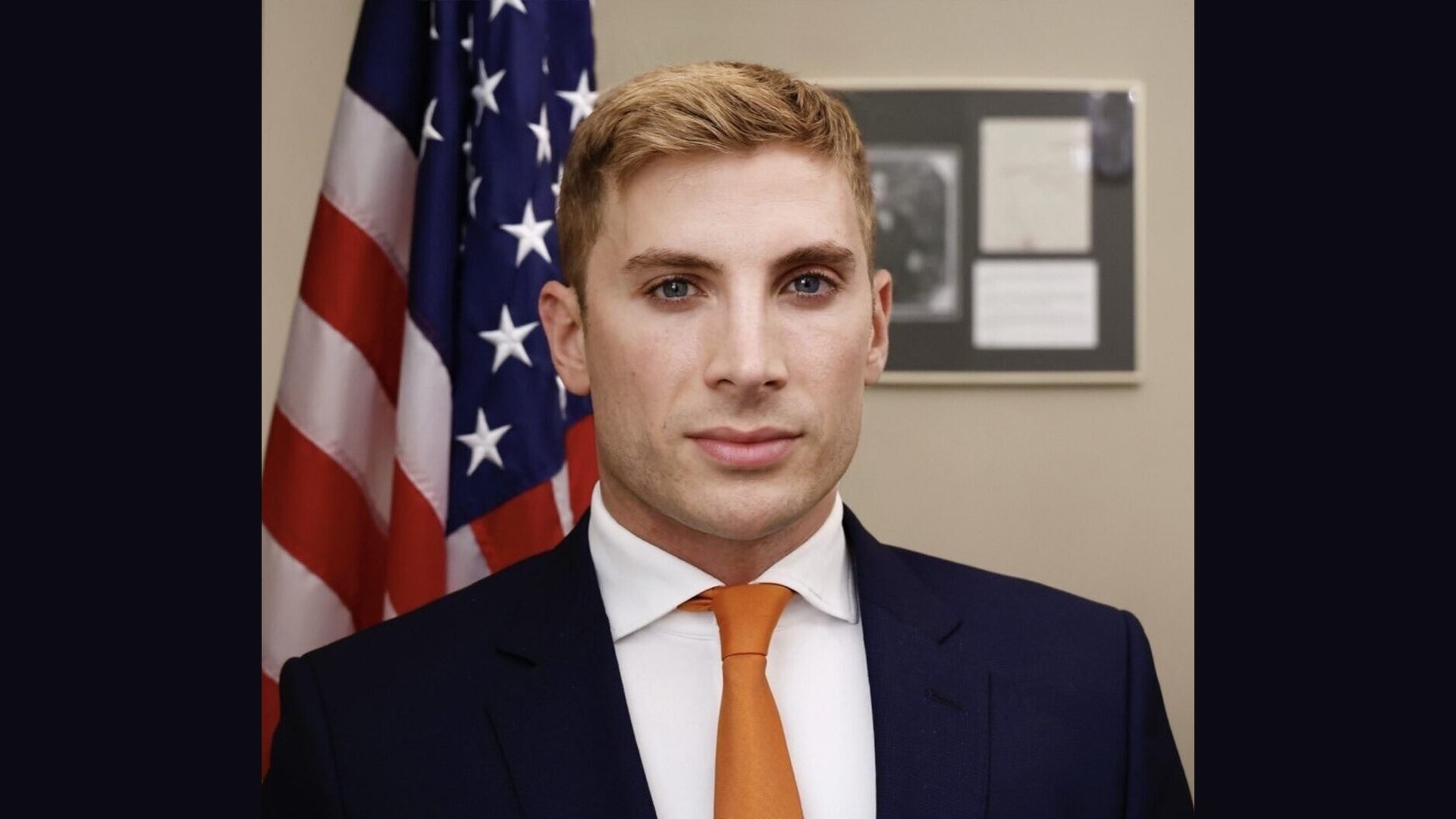
On Nov. 9, Tax Collector Dariel Fernandez announced that his office had begun accepting Bitcoin for property taxes, both online and in person. In a Nov. 10 post, he said the office “now accepts” Bitcoin. The office’s payment-methods page still does not list cryptocurrency among accepted forms of payment, and WLRN reported the option would not start until Nov. 19.
“Government must keep up with the times and the needs of the people we serve,” Fernandez said in the announcement. “By accepting Bitcoin as a payment option, we are giving property owners another way to pay their taxes, whether online or in person, while continuing to offer the traditional payment methods they already know and trust.”
I think this is a good move, and the way it is built matters as much as the headline.
According to the tax collector’s office, a property owner picks the cryptocurrency option at online checkout, or asks for it at the counter, then connects a supported exchange account or digital wallet and authorizes the payment. A third-party system converts the Bitcoin to U.S. dollars before the money reaches the county. The office says it “does not hold, invest in, or manage cryptocurrency,” and it receives the full amount owed no matter what Bitcoin’s price does that day. The option is voluntary. Checks, cards and cash all still work.
That is the right way for a local government to start. Taxpayers get another choice. The county takes no price risk, and no county employee is guarding private keys. “We are embracing new technology without compromising our responsibility to protect taxpayer dollars,” Fernandez said. I agree with him.
Miami-Dade isn’t the first. Colorado has accepted cryptocurrency for all state tax payments since Sept. 1, 2022, through PayPal. Detroit started taking it for city taxes and fees in 2025. If the option works as advertised, Miami-Dade now joins them.
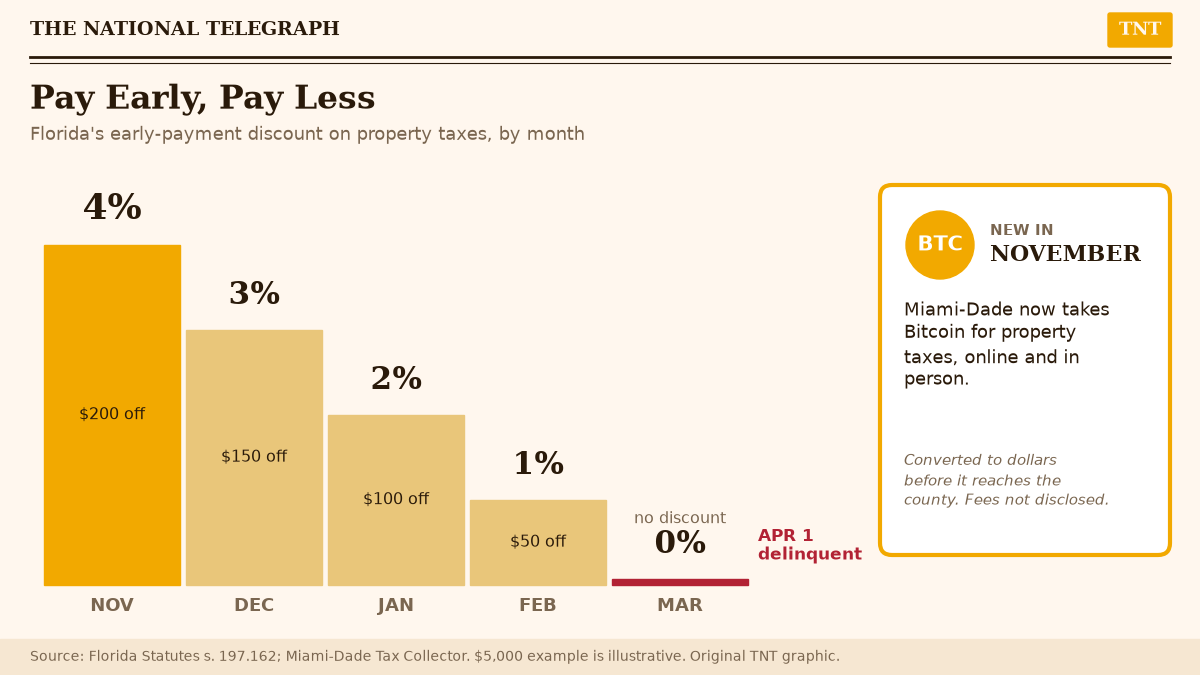
The announcement landed just as the biggest property-tax discount of the year kicked in. Under Florida law, paying in November gets you 4% off. The discount drops to 3% in December, 2% in January and 1% in February, and disappears in March. Fernandez’s office is running a “Save the Max” campaign to get people to pay early.
Here is what the press release doesn’t say. For federal tax purposes, the IRS treats digital assets as property, not currency. Spending Bitcoin on goods or services counts as disposing of it, and you have to report it, gain or loss.
So if you bought your coins years ago at a fraction of today’s price, paying your county tax bill with them means you have realized a capital gain. You could owe federal tax just for paying a county tax. Held more than a year, it is a long-term gain. Less than that, it is taxed at short-term rates. Either way it goes on Form 8949.
Then there are fees. The county’s announcement doesn’t name the payment processor or say what it charges. Colorado’s PayPal option costs $1 plus 1.83% of the payment. Ask before you pay. A fee near 2% would eat about half of your November discount.
None of this is Fernandez’s fault. It is Washington’s. As long as federal law treats every Bitcoin payment as a taxable sale, paying a bill in Bitcoin will stay a tax-planning exercise instead of an ordinary transaction. Sen. Cynthia Lummis’s S. 2207, which would reform the tax treatment of digital assets, has sat in the Senate Finance Committee since June 2025.
It is also worth being clear about what this is not. Miami-Dade never holds a single satoshi, so this is not a Bitcoin reserve. That debate is happening in Tallahassee. Florida’s reserve bills, SB 1038 and HB 1039, died on March 13, 2026. Byron Donalds, who won the governor’s race on Nov. 3, has talked up putting Bitcoin on the state’s balance sheet. Whether that happens is up to him and the Legislature. What Miami-Dade did is smaller and simpler: it removed one more reason Bitcoin holders have to go through a bank to deal with their government.
The same week Miami-Dade said it opened its window, a Broward city closed a door. On Nov. 10, the Sunrise City Commission voted 5-0 for an ordinance prohibiting virtual-currency kiosks in certain consumer-facing locations, after police warned that scammers use the machines to steal from seniors, according to a Citizen Portal summary of the meeting. Sunrise follows Coral Springs, which voted 4-0 on Oct. 21 to ban the kiosks citywide under Ordinance 2026-115.
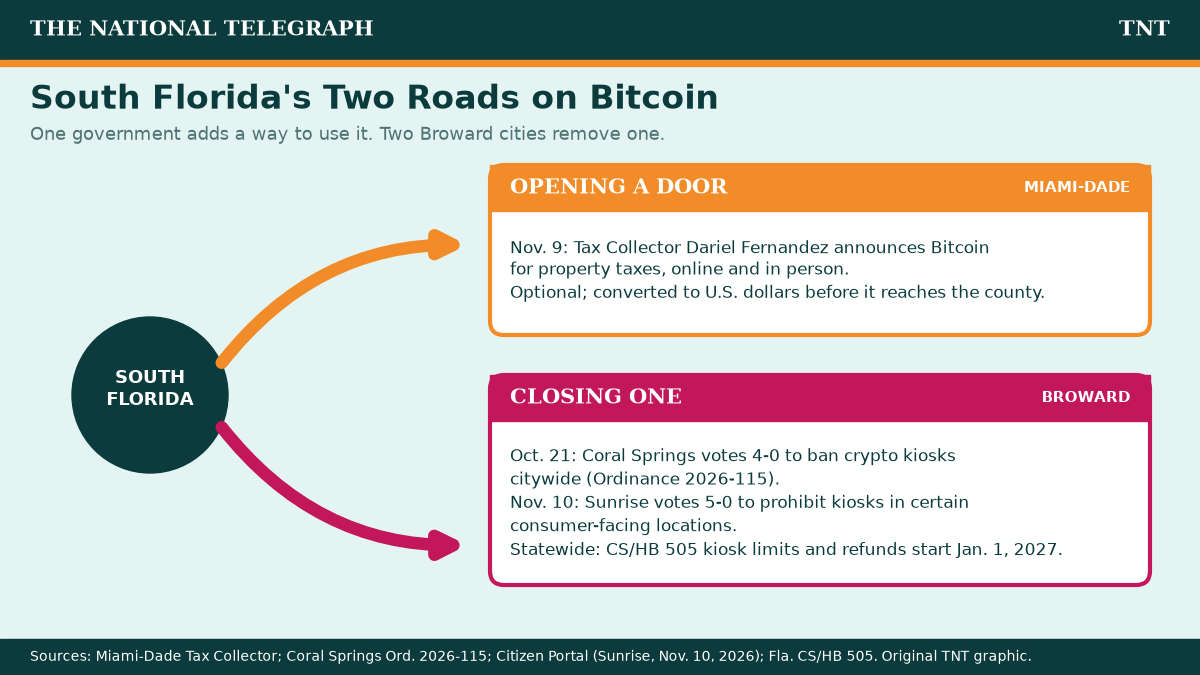
The scams are real, and the victims are often elderly. I don’t wave that away. But Florida already passed a statewide kiosk law, CS/HB 505, with daily limits and refund rules that take effect Jan. 1, 2027. The answer to fraud is to prosecute fraudsters and let those guardrails work, not to ban a legal tool city by city. Criminals can switch to gift cards and wire transfers. The law-abiding Bitcoin user just loses an option.
Miami-Dade got the balance right. It added a choice, protected taxpayers from price swings, and didn’t make Bitcoin a political statement either way.
Florida voters just made their feelings about property taxes clear. On Nov. 3 they overwhelmingly approved Amendment 3, which raises the homestead exemption to $150,000 next year and $250,000 the year after. People want government to take less and serve them better. Letting them pay in the money they actually use is part of serving them better.
My advice: if you want to use the new option, pay in November, check the fee, and talk to your accountant first. And if your coins have a very low cost basis, you might pay the county in dollars and keep your Bitcoin.
Sources: Miami-Dade County Tax Collector, “The Future Is Now: Miami-Dade Tax Collector Dariel Fernandez Begins Accepting Bitcoin for Property Taxes” (Nov. 9, 2026); Dariel Fernandez, X, Nov. 10, 2026; Miami-Dade Tax Collector, Payment Methods page (checked Nov. 14, 2026); WLRN (Nov. 10 and Nov. 5, 2026); Florida Statutes s. 197.162; IRS, Digital assets; Colorado Department of Revenue, Cryptocurrency; Congress.gov, S. 2207; Coral Springs Ordinance 2026-115; Citizen Portal (Nov. 10, 2026).

B.J. Dichter is a contributor to The National Telegraph and the producer and creator of Not On Record, a weekly podcast on politics and culture. He produces Open College with philosopher Stephen Hicks and hosts Coffee with BJ, his live show. A former trucker, he was a spokesperson for the 2022 Freedom Convoy and wrote about it in Honking For Freedom. He writes from a classical liberal, libertarian conservative perspective on free speech, Canadian and US politics, Israel and Bitcoin.
 November 16, 2026 November 16, 2026
Leave a Reply