[…] Trump also repeated claims about Kansas and Michigan races that fact-checkers have challenged. Those include an unsupported suggestion that…
Written By B.J. Dichter, Posted on October 28, 2026
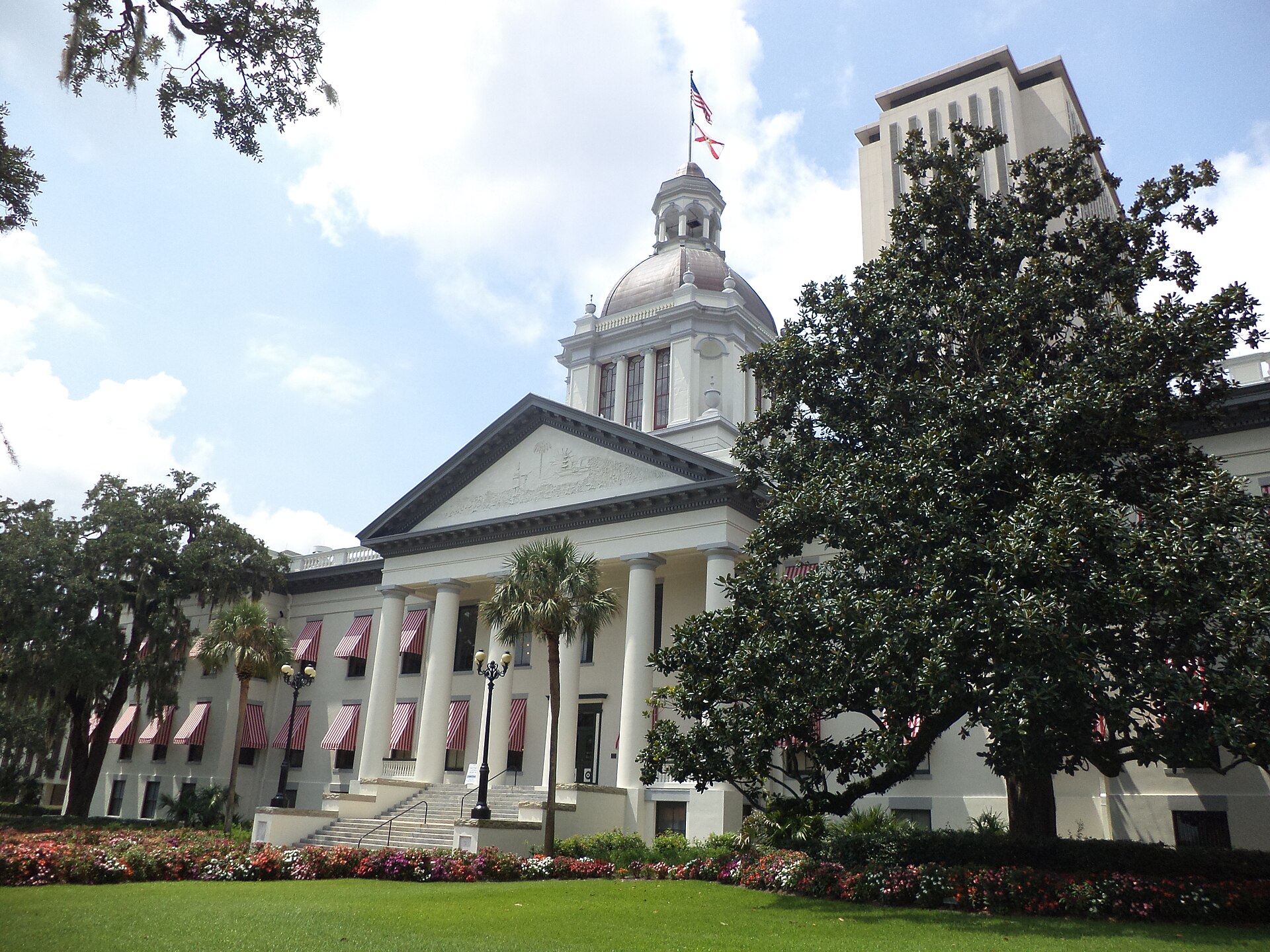
Featured photo: Florida’s Historic Capitol and the State Capitol tower, Tallahassee. Michael Rivera, CC BY-SA 3.0, via Wikimedia Commons.
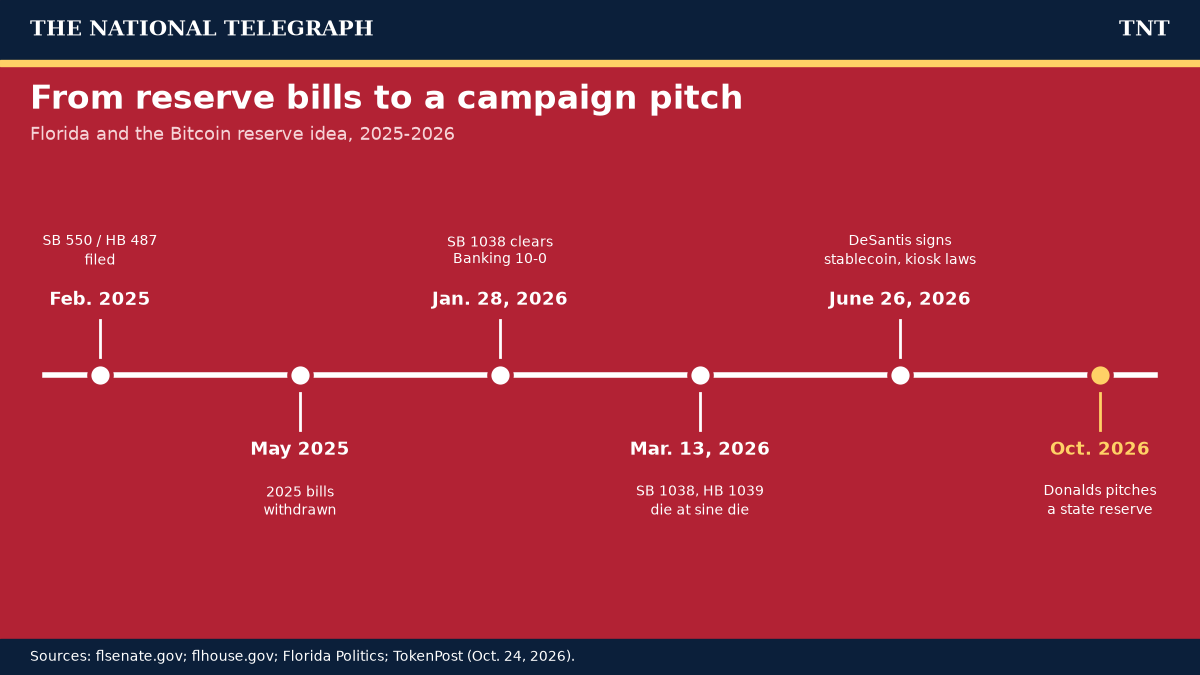
Byron Donalds, the Republican nominee for Florida governor, says the state should think about holding Bitcoin. In an interview reported by TokenPost on Oct. 24, the Naples congressman said Florida should consider building a state Bitcoin reserve and could lead on fractional ownership of real-world assets. He called Bitcoin a commodity-like hedge against monetary policy.
I’m glad to hear it. A governor who sees sound money as a hedge against Washington’s printing press is a governor on the right side of history. But a campaign line is not a law. TokenPost noted that Donalds gave no bill number, no funding source, no custody plan and no timeline. Florida has been here before, and the idea died both times.
In February 2025, state Sen. Joe Gruters filed SB 550 and Rep. Webster Barnaby filed HB 487. Both would have let the Chief Financial Officer invest public money in Bitcoin, and let the State Board of Administration put pension trust money into it. The House version cleared the Insurance & Banking Subcommittee, then both bills were withdrawn on May 3, 2025.
The 2026 session went further. Gruters’ CS/SB 1038, the “Florida Strategic Cryptocurrency Reserve Act,” would have put the CFO in charge of a reserve, with a companion bill, SB 1040, creating the trust fund. Purchases were limited to any cryptocurrency with an average market cap of at least $500 billion over the prior 24 months, which in practice means Bitcoin. Money would come only from legislative appropriations or revenue the Legislature dedicates by law, and the fund would sunset in 2030 unless renewed. The bill cleared the Senate Banking and Insurance Committee 10-0 on Jan. 28. Then it sat in an appropriations subcommittee until it died on March 13. The House version, HB 1039 by Reps. John Snyder and Debbie Weinberger (Barnaby co-introduced), would have parked the reserve at the State Board of Administration. It reached the second-reading calendar and died there the same day.
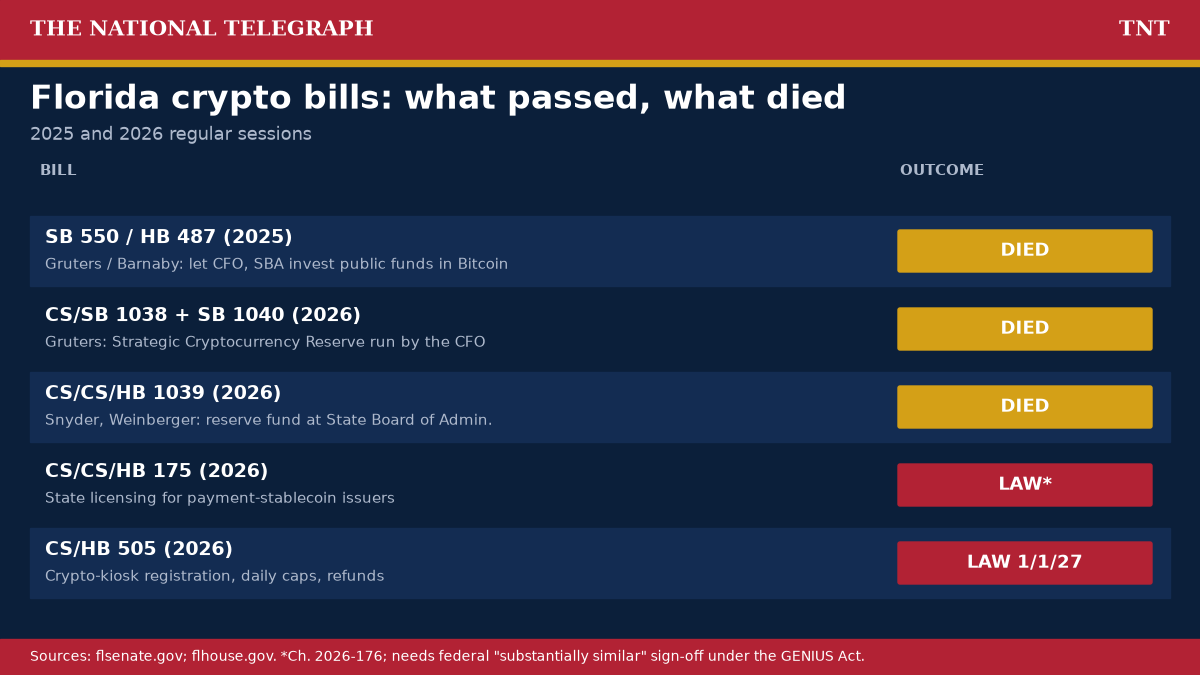
Meanwhile, Tallahassee passed the crypto bills that did not involve buying anything. Gov. Ron DeSantis signed three on June 26, Florida Politics reported. HB 175 created state licensing for payment-stablecoin issuers under the federal GENIUS Act. SB 1568, CFO Blaise Ingoglia’s legislative priority, lets the Department of Financial Services accept stablecoins for some fees, though it must convert them to dollars. And HB 505, which passed the House 107-0, makes Bitcoin kiosk operators register with the state starting Jan. 1, 2027. It also caps new customers at $2,000 a day and existing ones at $10,000, and requires refunds for some fraud victims. The House analysis cites “well over $33 million” in Florida kiosk-fraud complaints from 2020 to 2025.
Even the stablecoin law is not fully in effect. Florida Trend reports that it was supposed to take effect Oct. 1, but a federal committee of Treasury, the Fed and the FDIC must first certify that Florida’s rules are “substantially similar” to the GENIUS Act, and Florida missed a July 18 deadline to ask.
Florida is not leading on this. It is behind. In May 2025, New Hampshire’s HB 302, signed by Gov. Kelly Ayotte, let the state treasurer put up to 5% of public funds into Bitcoin or precious metals, Axios reported. Arizona’s Democratic governor, Katie Hobbs, vetoed a bill that would have let public funds be invested, but signed HB 2749, which keeps unclaimed crypto in a state reserve instead of selling it. In June 2025 Texas went furthest. Gov. Greg Abbott signed SB 21, creating a stand-alone Strategic Bitcoin Reserve run by the comptroller with the same $500 billion market-cap test Florida later copied, and the state set aside $10 million to buy Bitcoin, CoinDesk reported.
Donalds is no newcomer to this. In Congress he introduced H.R. 2112 in March 2025 to write President Trump’s federal Strategic Bitcoin Reserve order into law. He has opposed a central bank digital currency, and Florida’s 2023 law already keeps CBDCs out of the state’s definition of money. So he knows the drafting work exists. Florida’s reserve bills already answered most of the hard questions: who holds the keys, what qualifies, where the money comes from, and how the public gets reports. What they lacked was leadership willing to make it a priority in appropriations, where both bills died.
Here is what voters should ask him for before Nov. 3:
A modest, transparent reserve is a reasonable hedge for a state’s balance sheet. It tells the world Florida welcomes the builders that Washington spent years trying to push offshore. But Florida’s Bitcoin friends have heard “consider” for two sessions now. If Donalds wins next week, the 2027 session is where we find out whether this was a plan or a talking point.

B.J. Dichter is a contributor to The National Telegraph and the producer and creator of Not On Record, a weekly podcast on politics and culture. He produces Open College with philosopher Stephen Hicks and hosts Coffee with BJ, his live show. A former trucker, he was a spokesperson for the 2022 Freedom Convoy and wrote about it in Honking For Freedom. He writes from a classical liberal, libertarian conservative perspective on free speech, Canadian and US politics, Israel and Bitcoin.
[…] Trump also repeated claims about Kansas and Michigan races that fact-checkers have challenged. Those include an unsupported suggestion that…
[…] TNT reported Oct. 15, Omar’s official birth year used to be 1981. Emails reported by the New York Post…

Very well presented. Every quote was awesome and thanks for sharing the content. Keep sharing and keep motivating others.
 October 28, 2026 October 28, 2026
Leave a Reply