[…] Trump also repeated claims about Kansas and Michigan races that fact-checkers have challenged. Those include an unsupported suggestion that…
Written By TNT Staff, Posted on October 25, 2026
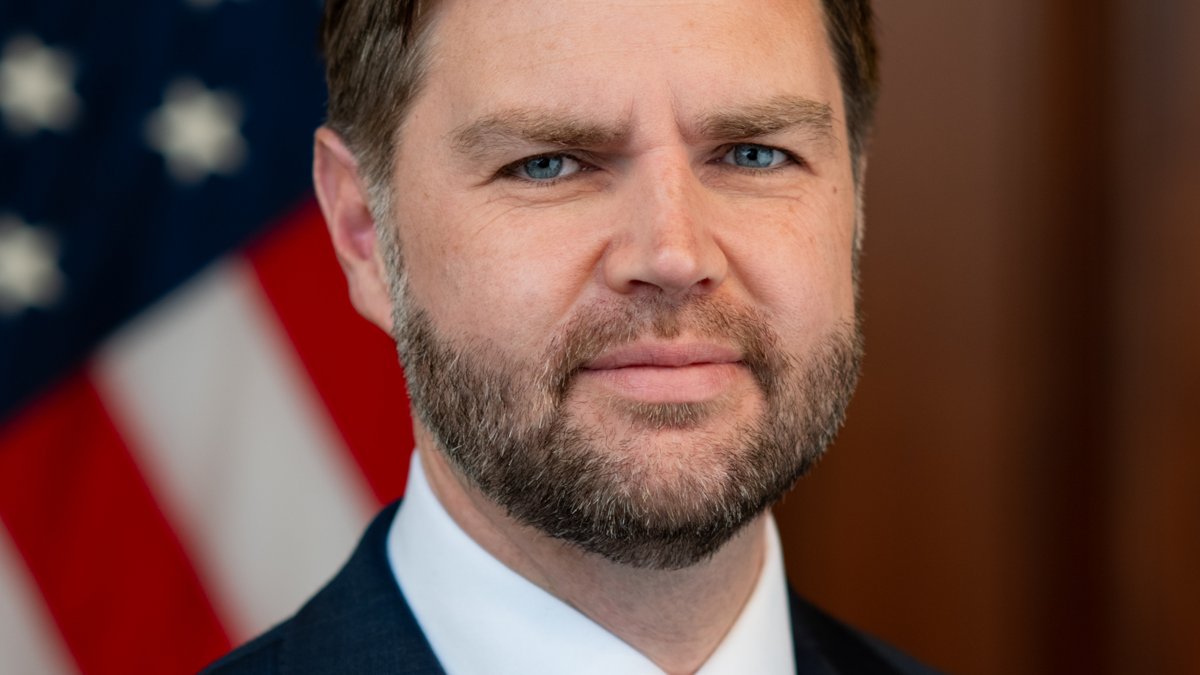
Featured photo: Vice President JD Vance, official portrait, March 2026. Photo: Emily J. Higgins, The White House, public domain, via Wikimedia Commons.
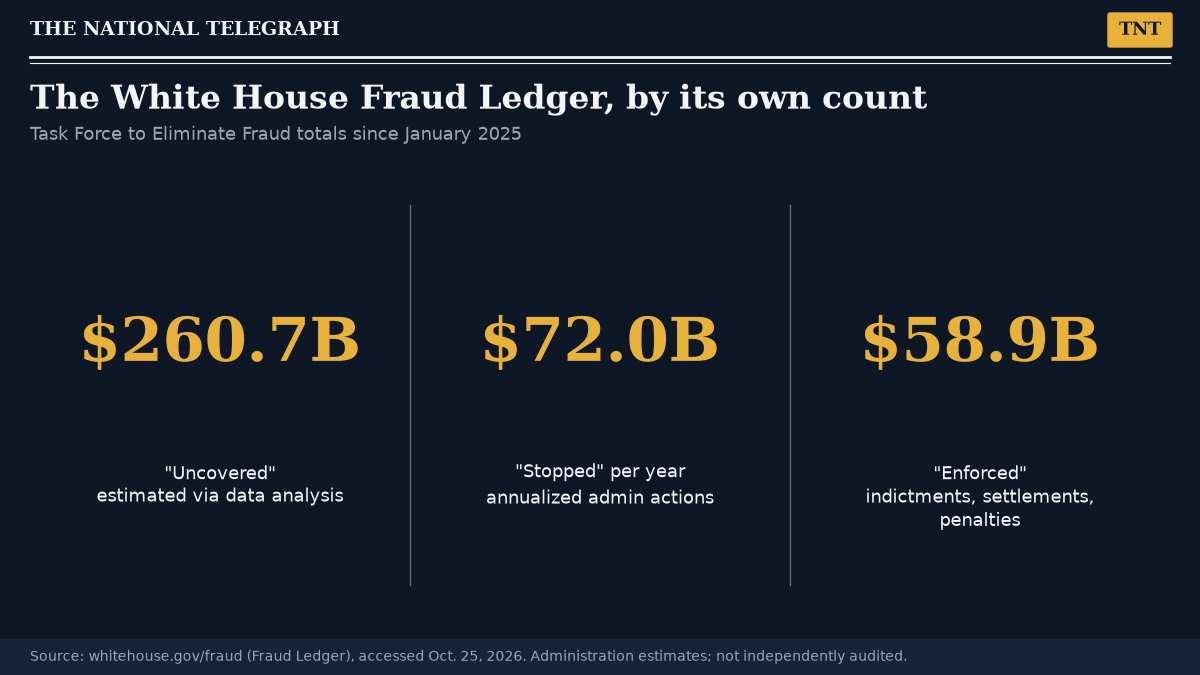
The Trump administration says it has found more fraud in federal programs in under two years than most Americans could picture. The White House’s Fraud Ledger, a public tally kept by the Task Force to Eliminate Fraud that Vice President JD Vance leads, puts the total at $260.7 billion “uncovered” since January 2025.
The ledger lists two more numbers. It says $72 billion a year in fraud has been “stopped” through actions like suspending providers and changing rules, and $58.9 billion has been “enforced” through indictments, settlements and civil penalties. Vance summed it up on X in September: “$260.7B in fraud uncovered since January 2025. $72B in fraud stopped. $58.9B recovered.”
These are the administration’s own estimates. The White House has not published an itemized breakdown, and a senior official has said it held back details to avoid compromising open investigations.
If anyone doubts that fraud in federal aid programs is real, Minnesota settles it.
In May, Aimee Bock, founder of the Minneapolis nonprofit Feeding Our Future, was sentenced to 500 months, more than 41 years, for leading a $250 million scheme against a federal child nutrition program during the pandemic. Prosecutors proved her network opened more than 250 meal sites that claimed to feed thousands of children a day, often within weeks of forming. Its federal funding jumped from about $3.4 million in 2019 to nearly $200 million in 2021. The money bought luxury cars, real estate and foreign travel. Judge Nancy Brasel called it “a fraud vortex,” and ordered $243 million in restitution.
It did not stop there. The same day Bock was sentenced, the Justice Department charged 15 people in a Minnesota health care fraud of more than $90 million, which the ledger calls the largest autism-services fraud ever prosecuted. The ledger also lists FBI raids on Minneapolis child care centers suspected of subsidy fraud, charges against 20 Minnesota businesses for food stamp trafficking, and a pause of nearly $260 million in Medicaid payments to the state, plus another $91 million deferred, while Washington demanded cooperation with fraud investigators.
That is what taxpayers have a right to expect: people who steal from programs meant for hungry children and disabled patients go to prison, and states that look the other way lose the benefit of the doubt.
The topline numbers deserve a harder look, and conservatives should be the first to give it. Small-government voters are the ones who want every dollar counted.
The ledger’s own agency table shows that two agencies make up almost all of the $58.9 billion. Health and Human Services reports $33.1 billion, and the Small Business Administration reports $22.6 billion. A New York Times analysis, reprinted by the Philadelphia Inquirer, found that most of the SBA figure is delinquent pandemic-era loans referred for debt collection, many flagged as possibly fraudulent before Trump returned to office. That is money owed, not money already back in the Treasury.
The analysis also found that the ledger counts some cases that began before this administration, and that Medicaid “savings” from California and Minnesota include payments that are only deferred. HHS itself says those funds can be released once states supply the paperwork.
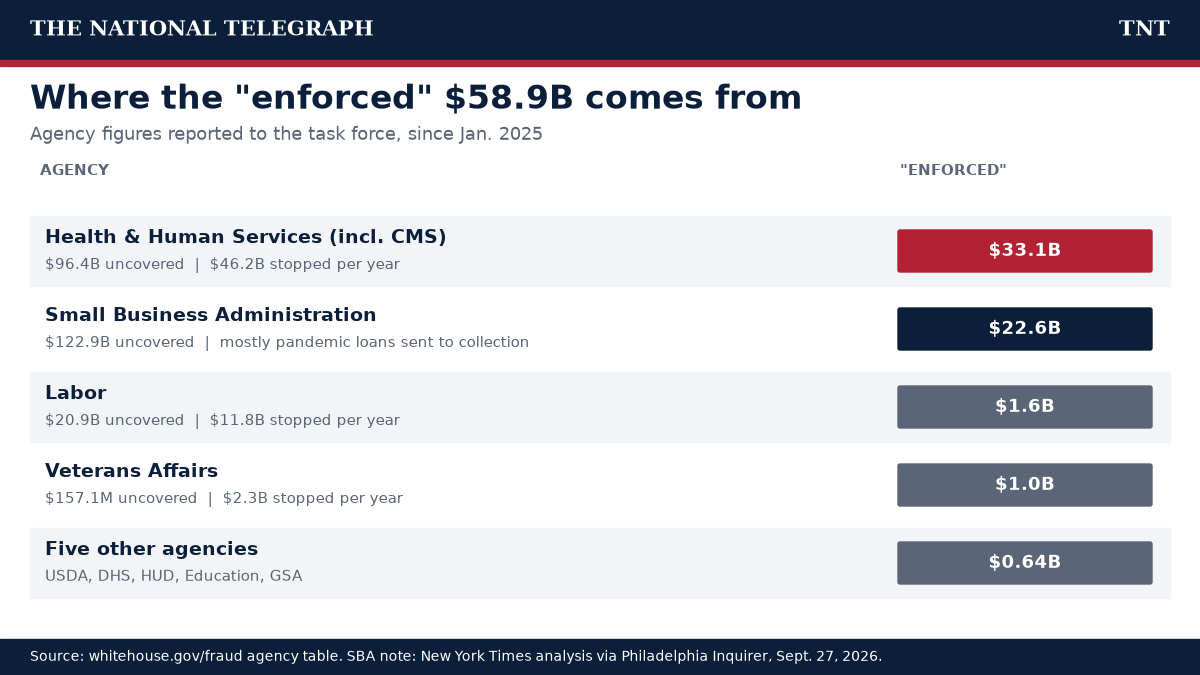
None of that means the fraud is imaginary. The Government Accountability Office estimates the federal government loses $233 billion to $521 billion a year to fraud. By that measure, the task force may be finding only part of the problem. But “uncovered” is an estimate, “stopped” is a yearly projection, and “enforced” includes charges and debts that have not been paid. “Recovered” is the wrong word for most of it.
Critics have a fair point about the other side of the ledger. While the task force chases fraudsters, the president has pardoned some.
Trevor Milton, founder of the electric truck maker Nikola, was convicted of defrauding investors and sentenced to four years. He was pardoned before a judge could rule on prosecutors’ request for more than $600 million in restitution, ABC News reported. Jason Galanis, ordered to repay more than $80 million to victims including pension funds, had his sentence commuted with a warrant stating no further restitution should be collected. Former pardon attorney Liz Oyer estimated that Trump’s second-term clemency recipients owed more than $1 billion in restitution combined.
The White House has said the president uses the pardon power “to offer people second chances.” But the victims of fraud are owed restitution by law, and it is hard to tell taxpayers that every stolen dollar matters while waiving hundreds of millions for well-connected defendants.
The fraud fight is worth having, and Minnesota proves it. The best way to win the argument is to publish the full ledger, line by line, and to treat a fraudster with friends the same as one without.

[…] Trump also repeated claims about Kansas and Michigan races that fact-checkers have challenged. Those include an unsupported suggestion that…
[…] TNT reported Oct. 15, Omar’s official birth year used to be 1981. Emails reported by the New York Post…

Very well presented. Every quote was awesome and thanks for sharing the content. Keep sharing and keep motivating others.
 October 25, 2026 October 25, 2026

Leave a Reply