[…] convicted of first-degree criminal sexual conduct after sexually assaulting a 10-year-old girl. ICE deported him in July. The same…

Written By TNT Staff, Posted on November 21, 2026
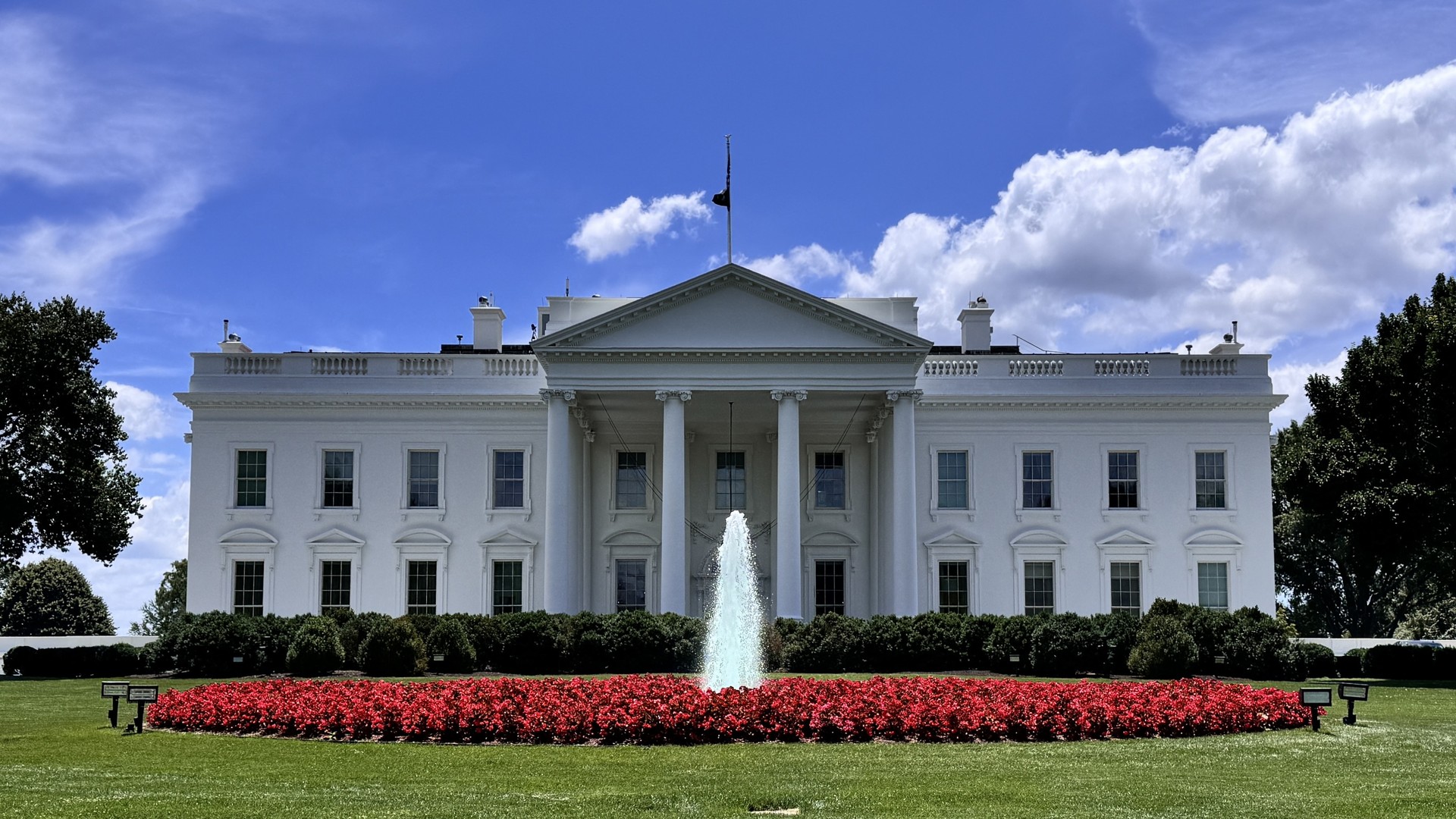
Congress does not get to walk around the White House and pull confidential executive-branch files out of a contractor’s cabinet. President Trump closed that side door on Friday, ordering federal contractors and subcontractors to notify the White House whenever lawmakers ask for records of their work with the executive branch, and to withhold any communications the White House or a contracting agency determines are protected by executive privilege.
The order, posted by the White House under the title “Protecting the Executive’s Privileges and Enhancing Efficiencies in Federal Contracting,” takes effect immediately. Agencies must tell their contractors and subcontractors what is required of them. The Office of Management and Budget is directed to issue guidance on how agencies will enforce it and how the White House, the contracting agency and the contractor are supposed to coordinate.
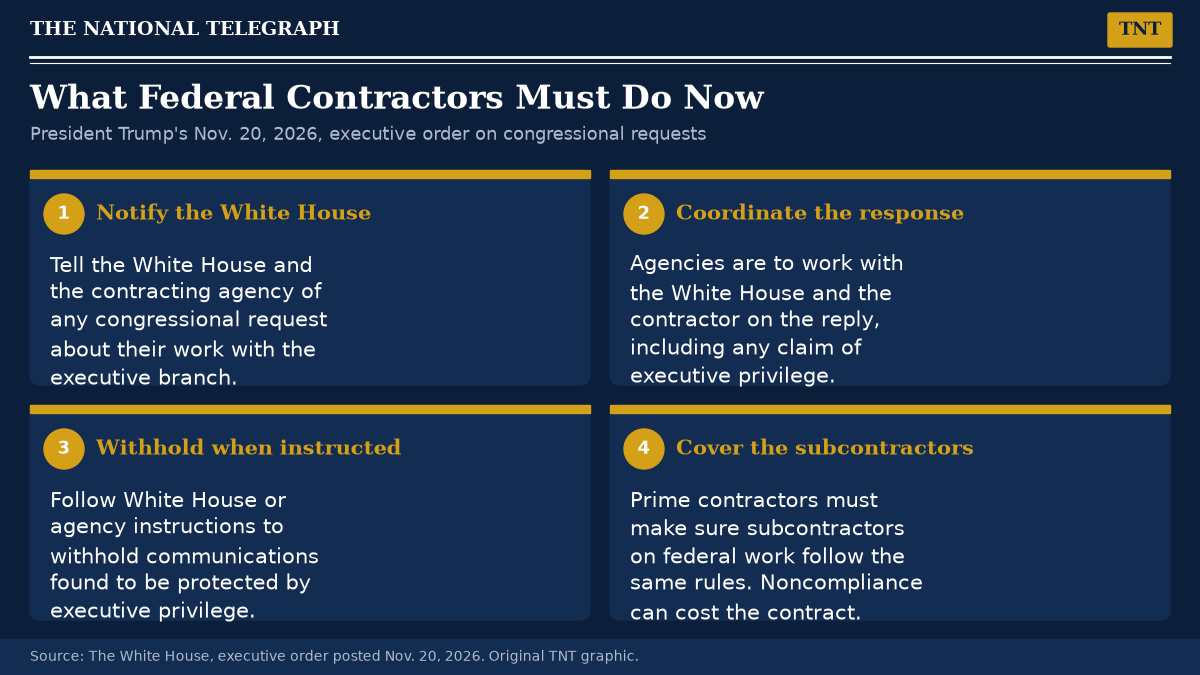
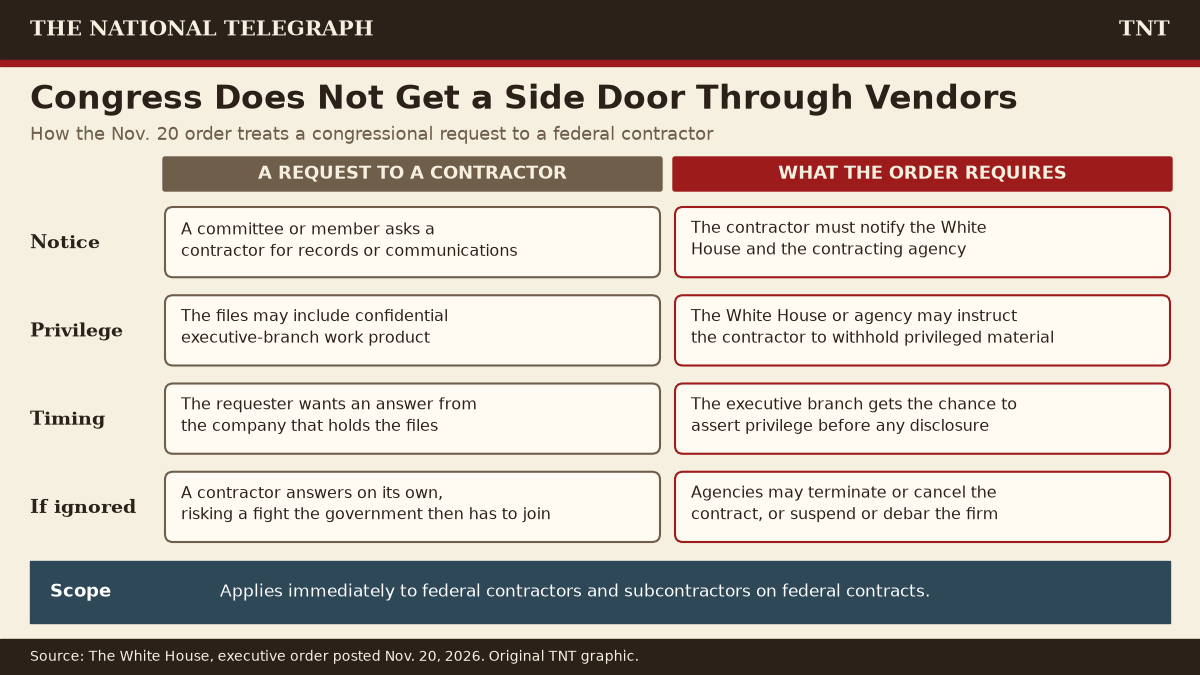
The requirements are straightforward. A federal contractor that receives a “pending or future congressional request” about its “communications or work with the executive branch” must notify the White House and the contracting agency, and “abide by any instructions” from either one “related to the withholding of communications that the White House or the agency has determined are protected by executive privilege.”
Agencies are told to coordinate with the White House and the contractor on the response, “including the application or assertion of any relevant privileges.” The same rules apply to subcontractors on a federal contract, and prime contractors are responsible for making sure those subcontractors comply.
If a contractor or subcontractor does not, contracting agencies “shall consider whether to take all appropriate actions, consistent with applicable law,” including “the potential termination or cancellation of contracts and the potential debarment or suspension of contractors.”
The order’s premise is a basic one about the separation of powers. Executive privilege, the text says, citing the Supreme Court, “is inextricably rooted in the separation of powers under the Constitution” and “protects confidential executive branch information from disclosure.” That language comes from the Court’s 1974 decision in United States v. Nixon. The privilege exists so the executive branch can do its work, including with contractors, “without fear that confidential information will be released to unauthorized third parties.”
Congress, the order says, “cannot seek information from executive branch departments and agencies (agencies), employees, or Federal contractors without a valid legislative purpose that does not intrude on core Executive functions.” And it cannot obtain privileged information, including material shared between federal employees and federal contractors, “before the executive branch has an opportunity to assert relevant privileges.”
“Despite these bedrock protections, certain congressional leaders have threatened to intrude on these Executive prerogatives by seeking confidential executive branch information from agencies and harassing private companies that contract with the Federal Government,” the order states. It does not name the leaders. A companion White House fact sheet uses the same language.
The practical problem, as the White House describes it, is uncoordinated disclosure. If a contractor answers a congressional request on its own, the executive branch may have to “intervene or engage in separate litigation to defend its rights.” Contractors may not know the government’s position. Two tracks of litigation over the same records waste time and taxpayer money. And if the White House and the agencies cannot be sure that sensitive communications with contractors will stay confidential, including on “matters of national and homeland security,” they will be “chilled from sharing sensitive information with contractors,” which the order says would “stymie the operation of critical Government programs” and could push the government to rely less on contractors altogether.
None of this bars Congress from asking questions that serve a legitimate legislative purpose. It requires that the executive branch get a chance to review the request and assert privilege where it applies, instead of having the material walk out the door through a vendor. The order rests on the President’s authority under the Constitution, the common law, and the Federal Property and Administrative Services Act, the statute that governs how the executive branch buys goods and services.
The White House page currently labels the order Executive Order 14438. The Federal Register already assigned that number to a different order, signed October 22, on housing costs. Friday’s contractor order has not yet appeared in the Federal Register, which is where executive orders receive their official numbers when they are published.
The test now is whether contractors actually give notice, and whether the White House and the agencies use that notice the way the order describes: to protect privileged material, not to hide work Congress is entitled to see. The Constitution already draws that line. Friday’s order tells the people who do business with the government to respect it.
Sources: The White House, “Protecting the Executive’s Privileges and Enhancing Efficiencies in Federal Contracting” (Nov. 20, 2026); White House fact sheet of the same date; United States v. Nixon, 418 U.S. 683 (1974); Federal Register, Executive Order 14438, “Decreasing Housing Costs for the American People” (signed Oct. 22, 2026, published Oct. 28, 2026).

 November 21, 2026
 November 21, 2026
Leave a Reply