[…] convicted of first-degree criminal sexual conduct after sexually assaulting a 10-year-old girl. ICE deported him in July. The same…

Written By TNT Staff, Posted on November 22, 2026
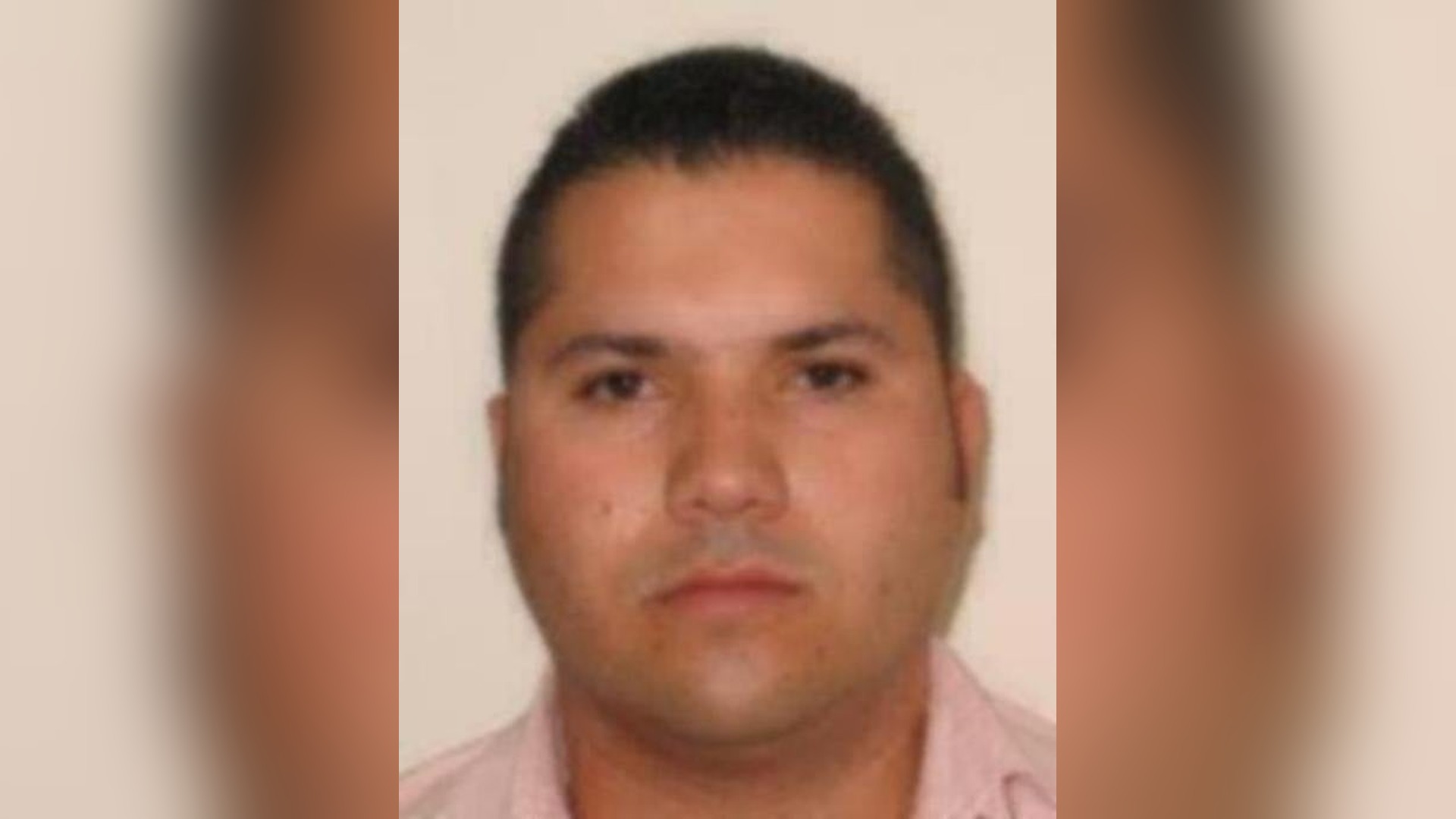
Mexican special forces took Fausto Isidro Meza Flores, known as “Chapo Isidro,” out of a house in Guasave, Sinaloa, on Friday. He was one of the FBI’s Ten Most Wanted fugitives, and he now faces U.S. narcoterrorism charges that exist because the United States has designated the Sinaloa Cartel a Foreign Terrorist Organization. Mexico’s defense secretariat said four soldiers were killed in the operation.
The Justice Department announced the capture on Saturday, crediting a Mexican military operation supported by the Homeland Security Task Force. “We commend Mexico’s military and special forces on last night’s capture of Sinaloa Cartel senior leader ‘Chapo Isidro,'” Attorney General Todd Blanche said. “This successful operation is the result of a bilateral effort to eliminate terrorists in Mexico. We extend our condolences to the families of the elite soldiers who were killed and our gratitude to the Mexican government.”
The governments do not use the same label, and the differences are worth stating. The Justice Department calls Meza Flores, 44, of Sonora, Mexico, an alleged leader of the Sinaloa Cartel. The FBI, on the Ten Most Wanted page that now marks him captured, describes him as the alleged leader of the Meza-Flores Transnational Criminal Organization, a heavily armed drug-trafficking group based in Sinaloa. Mexico’s Secretariat of National Defense (SEDENA), in a Nov. 21 comunicado, called him the head of the Beltrán Leyva criminal organization and an ally of the “Mayos” faction of the “Cártel del Pacífico.” On Feb. 20, 2025, the Secretary of State designated the Cartel de Sinaloa a Foreign Terrorist Organization and a Specially Designated Global Terrorist, listing the aliases Sinaloa Cartel, Mexican Federation and Guadalajara Cartel. Those designations are what make the material-support and narcoterrorism counts possible.
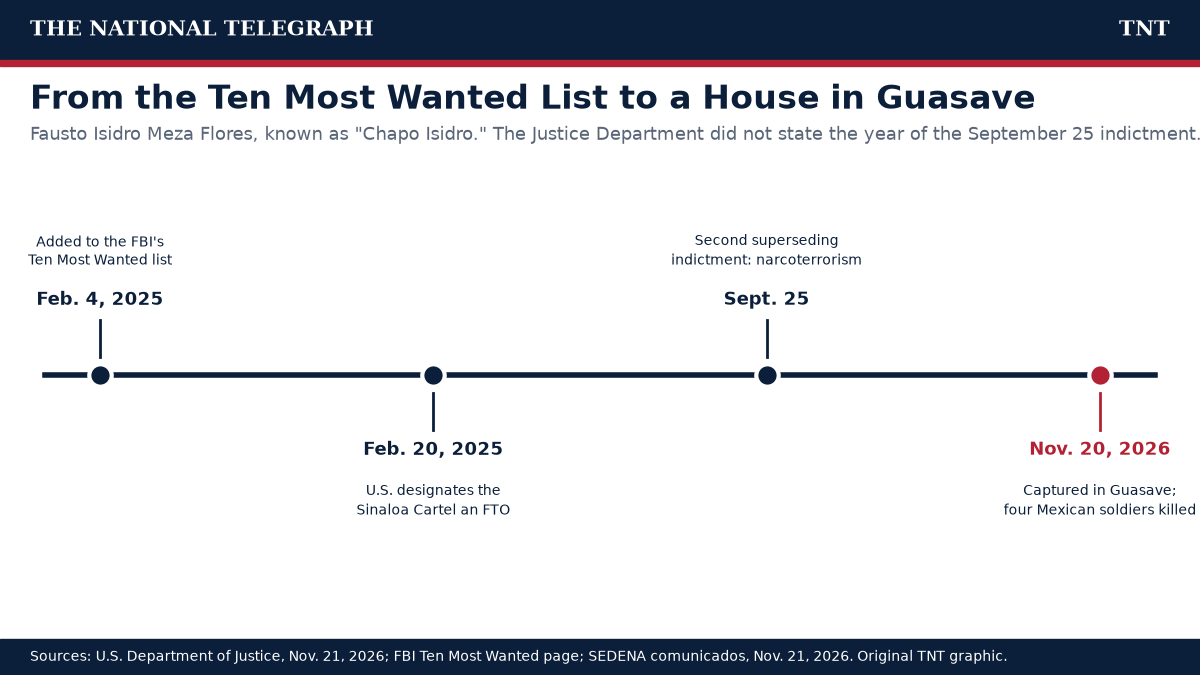
SEDENA said the Nov. 20 operation was coordinated with U.S. intelligence services. Special forces of the National Guard, known as the Lobos, and of the Mexican Army, known as the Murciélagos, carried it out with army special-forces personnel assigned to the Sinaloa state public-security secretariat. The force came under fire from guns and explosives and went into the house to make the arrests, the secretariat said. The detainees were flown to Mexico City on a Mexican Air Force aircraft. SEDENA said road blockades followed in Ahome, Guamúchil, Guasave and Navolato.
A follow-up comunicado said Meza Flores, German Rolando Galvez Meza, also known as “El Serafin,” and a man identified only as José N arrived in Mexico City at 5:20 a.m. on Nov. 21 and were turned over to the Specialized Prosecutor’s Office for Organized Crime. The Justice Department also named Galvez Meza and called him an alleged cartel leader. SEDENA described him as Meza Flores’s cousin and second-in-command, and José N as his brother-in-law and financial operator. In all, the secretariat said, eight alleged offenders were detained, seven attackers were killed, and troops seized a .50-caliber rifle, 10 other firearms, a grenade launcher, two hand grenades, ammunition, tactical equipment, drugs and cash. It said it had no report of harm to people unconnected to the events.
Four soldiers died, SEDENA said: regular infantry of the Mexican Army who were traveling to reinforce security in Guasave, not the special-forces units that made the capture. Mexico has a warrant for Meza Flores on organized-crime and drug charges and said he is the subject of a U.S. extradition order. Those are accusations. He has not been convicted of the U.S. charges, and the Mexican warrant is not a verdict.
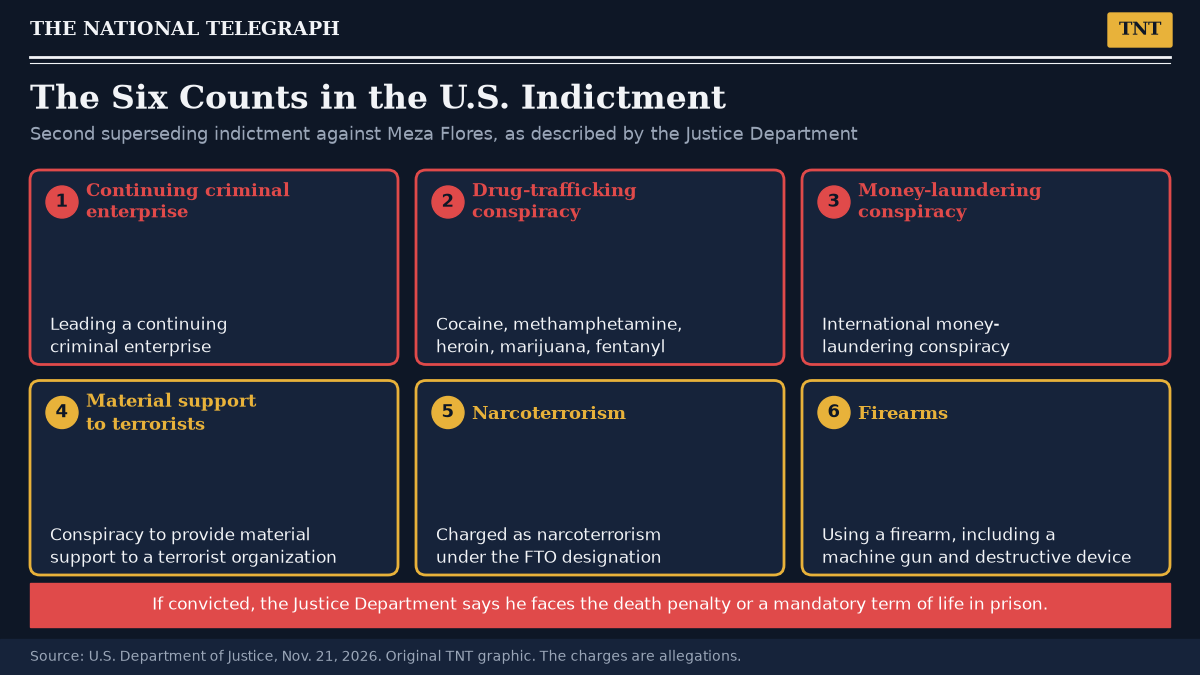
A federal grand jury in the District of Columbia returned a second superseding indictment on September 25, the Justice Department said, without stating the year. The six-count indictment charges Meza Flores with leading a continuing criminal enterprise; conspiracy to manufacture and distribute cocaine, methamphetamine, heroin, marijuana and fentanyl for importation into the United States; international money-laundering conspiracy; conspiracy to provide material support to a terrorist organization; narcoterrorism; and using a firearm, including a machine gun and a destructive device. The FBI says he was first indicted in the same court on May 2, 2012, with a superseding indictment in November 2019, and was added to the Ten Most Wanted list on Feb. 4, 2025.
According to court documents cited by the Justice Department, Meza Flores led the production and trafficking of multi-ton quantities of those drugs into the United States and commanded gunmen who controlled territory in Guasave, Los Mochis and the remote Sinaloa mountains. The department further alleges that he engaged in continual and extreme violence, including murdering rival cartel members in public; kidnapping, torturing and murdering rival cartel members; kidnapping, torturing and murdering members of the Mexican police; and terrorizing people in Mexico. Those are the government’s allegations. If convicted of the charges, the department said, he faces the death penalty or a mandatory term of life in prison.
“Another FBI Ten Most Wanted fugitive is off the board,” FBI Director Kash Patel said. “This alleged cartel leader is accused of flooding American communities with deadly drugs, including fentanyl. This is the 11th Ten Most Wanted fugitive captured under the Trump Administration.” Homeland Security Secretary Markwayne Mullin said the Homeland Security Task Force and Homeland Security Investigations “relentlessly pursued one of the world’s most dangerous cartel leaders” and that “cartel leaders cannot hide behind borders, money, or brutality.” The State Department has offered a reward of up to $5 million for information that led to the arrest and/or will lead to a conviction. The case is being prosecuted by the U.S. Attorney’s Office for the Southern District of California and the Justice Department’s Money Laundering, Narcotics and Forfeiture Section.
The FTO designation changed the legal tools. A man the FBI put on its shortest list is now in custody in Mexico City, four Mexican soldiers are dead, and the United States intends to try him as a narcoterrorist, not only as a trafficker. Cartel bosses can still fight. They can no longer treat the border as a shield.
Sources: U.S. Department of Justice, “Senior Leader of the Sinaloa Cartel and One of FBI’s Ten Most Wanted Fugitives Arrested in Mexico Following a Homeland Security Task Force Investigation” (Nov. 21, 2026); FBI, Ten Most Wanted page for Fausto Isidro Meza-Flores; Secretariat of National Defense, “Fuerzas Especiales de la Guardia Nacional y del Ejército detienen a Fausto N (a) ‘Chapo Isidro'” and “Seguimiento a la operación de captura de Fausto N (a) ‘Chapo Isidro,’ jefe de la organización delictiva ‘Beltrán Leyva'” (Nov. 21, 2026).

 November 22, 2026 November 21, 2026
Leave a Reply