[…] Treasury’s Nov. 20 designations of four Iranian oil trustees, which The National Telegraph reported this week. Both were carried…
Written By TNT Staff, Posted on November 24, 2026
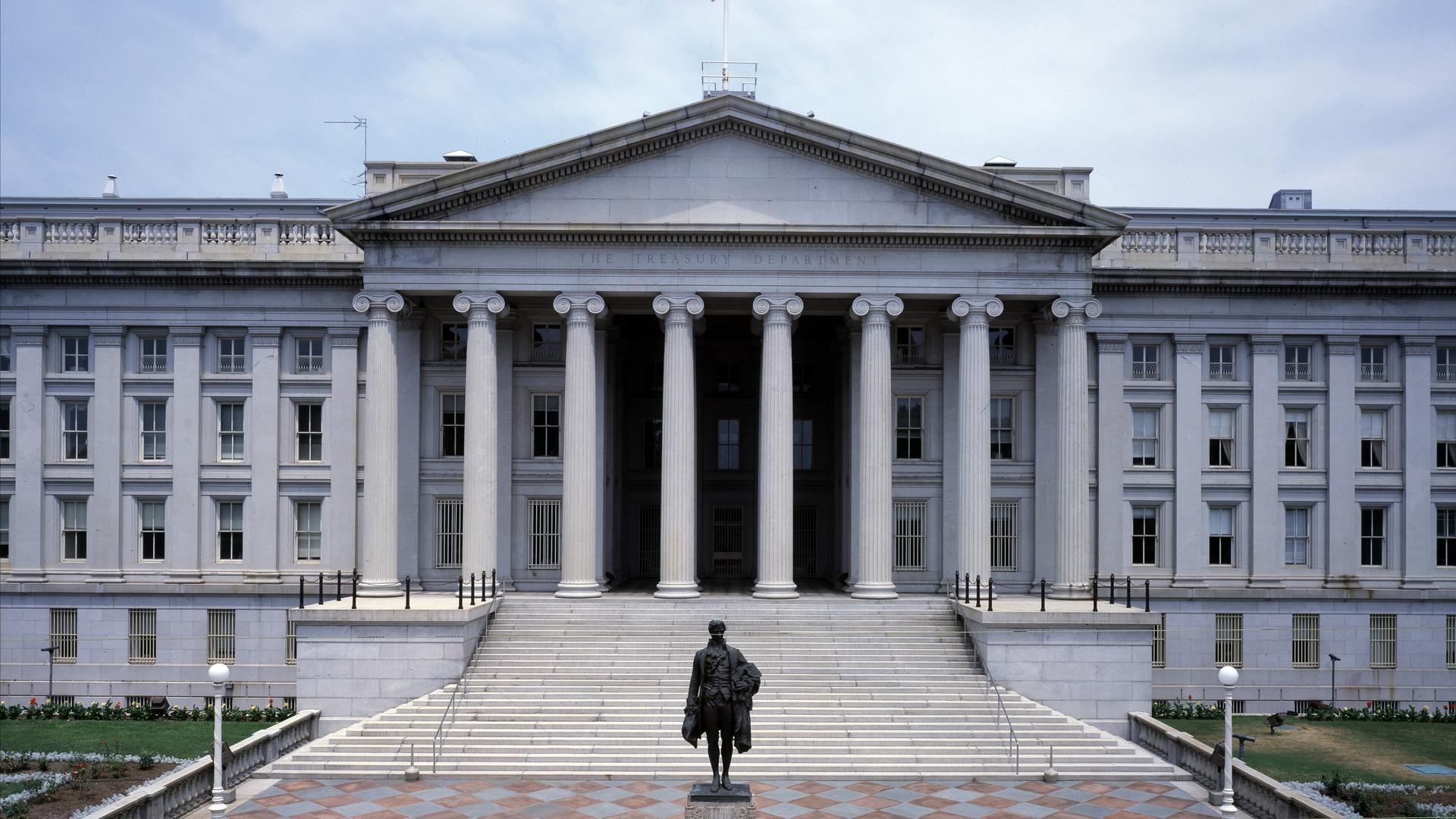
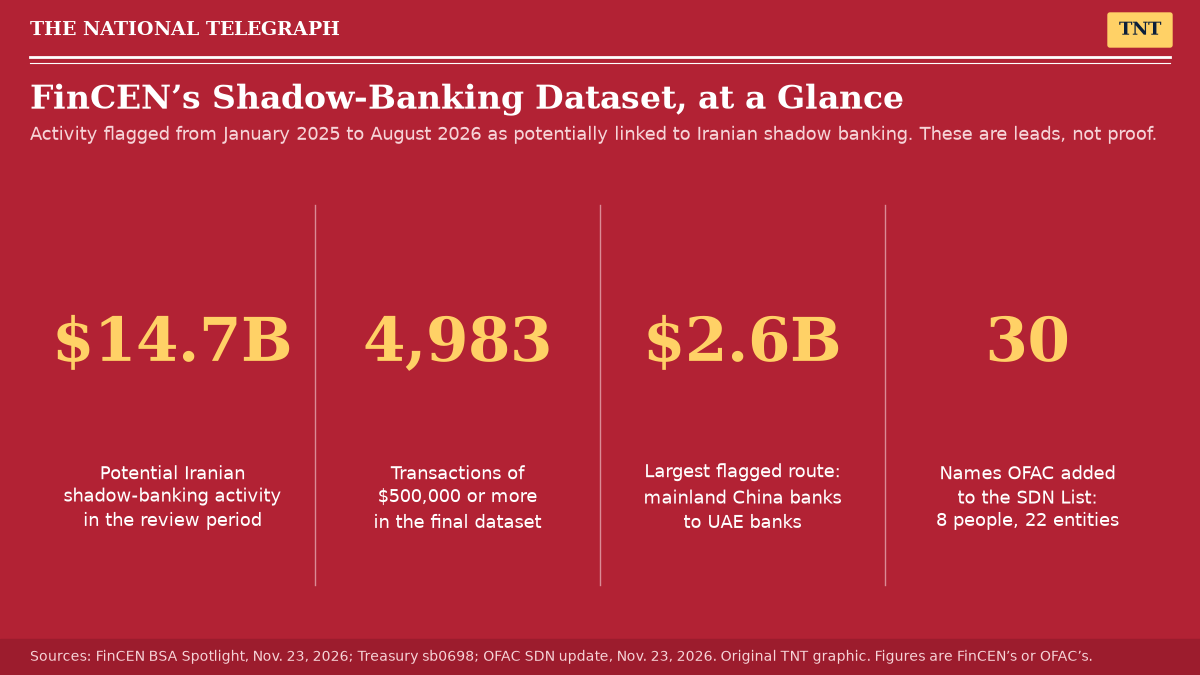
The Treasury Department on Nov. 23 sanctioned more than two dozen Iranian exchange houses, front companies, and key personnel in what it described as a sweep against the regime’s global shadow-banking networks. The same day, Treasury’s Financial Crimes Enforcement Network identified about $14.7 billion in financial activity from January 2025 to August 2026 that it said was potentially linked to those networks.
“Iran’s economy is underwater, and its leaders are panicking,” Treasury Secretary Scott Bessent said. “Iran’s shadow banking system is the last financial lifeline of a bankrupt regime. Treasury will continue dismantling these illicit networks until we have buried the head of the snake.”
The designations, made as part of Operation Economic Outcast, are financial sanctions, not criminal convictions. The $14.7 billion figure is FinCEN’s reading of reports from U.S. financial institutions, not a court finding and not a complete estimate of Iran’s shadow-banking system.
Treasury’s press release said the action targets the infrastructure that still underpins much of Iran’s remaining foreign trade, “disrupting the exchange houses, front companies, and facilitators that move billions of dollars through the international financial system to provide the regime access to foreign currency despite comprehensive sanctions.” The designations were made under Executive Order 13902, which covers sectors of the Iranian economy including finance; Executive Order 13224, as amended, a counterterrorism authority; and Executive Order 13871, which targets Iran’s metals industry.
Treasury said Iran’s shadow-banking system is overseen by the Central Bank of Iran and runs on Iran-based exchange houses and “rahbar companies,” bank affiliates that manage sanctions-evasion networks for Iranian clients. The exchange houses and rahbar companies, it said, work “hand-in-hand” through thousands of front companies in multiple countries, “most prominently, but not exclusively, in Dubai and Hong Kong.”
Among the names designated on Nov. 23 was Rahbar Bazargani Nesim Baharan Qeshm Company, which Treasury said operates as the rahbar for Bank Sarmayeh and handles transactions for Iranian petrochemical clients. Three of its senior officials were designated with it. Treasury also designated two Iran-based exchange houses, Mina Fashki and Partners Exchange Company and Mellat Exchange Company, along with their owners and officials.
The front companies named on Nov. 23 are concentrated in Dubai, with others in Hong Kong and Turkey. Treasury said Recaz Star General Trading LLC “has sent and received hundreds of payments totaling over $170 million from persons associated with Sadaf Exchange.” OGA Global General Trading L.L.C, it said, “has overseen millions of dollars’ worth of payments for the National Iranian Tanker Company, which operates Iran’s fleet of state-owned oil tankers.” Khore Al Hilal Goods Wholesalers Trading LLC, Treasury said, has been used extensively by already-sanctioned Iranian exchange houses to move millions of dollars for Bank Sepah. H N B Trading Co LLC was designated under the counterterrorism order for support to Sepehr Energy Jahan Nama Pars Company, a front Treasury has previously tied to the Iranian Armed Forces General Staff; the department said the Dubai firm received hundreds of thousands of dollars from a Sepehr Energy front as payment for the charter of the tanker SERENE I.
Treasury also designated the Iran Center for Exchange of Currency and Gold, which it said plays “an essential intermediary role” by matching exporters who earn foreign currency with importers who need it, “for tens of billions of dollars’ worth of trade every year.” While the shadow banks move the money, Treasury said, the Center “plays matchmaker and guides these funds to their ultimate destination inside Iran.” The Central Bank of Iran, it said, also uses bonds issued by the Center to help facilitate trade in Russian roubles and Chinese yuan without relying on the U.S. dollar.
In a companion announcement and a Financial Trend Analysis released the same day, FinCEN said it identified about $14.7 billion in activity “related to potential Iranian shadow banking activities” from January 2025 to August 2026. The final dataset, the bureau said, covered 4,983 transactions of $500,000 or more, after it dropped transfers it could not corroborate as linked to Iran.
FinCEN warned that Bank Secrecy Act reporting “is merely tip and lead information, and the mere reporting of suspicious activity does not serve as proof of illegal activity,” and should not be treated as a complete picture of the activity. Those caveats apply to every figure in the report.
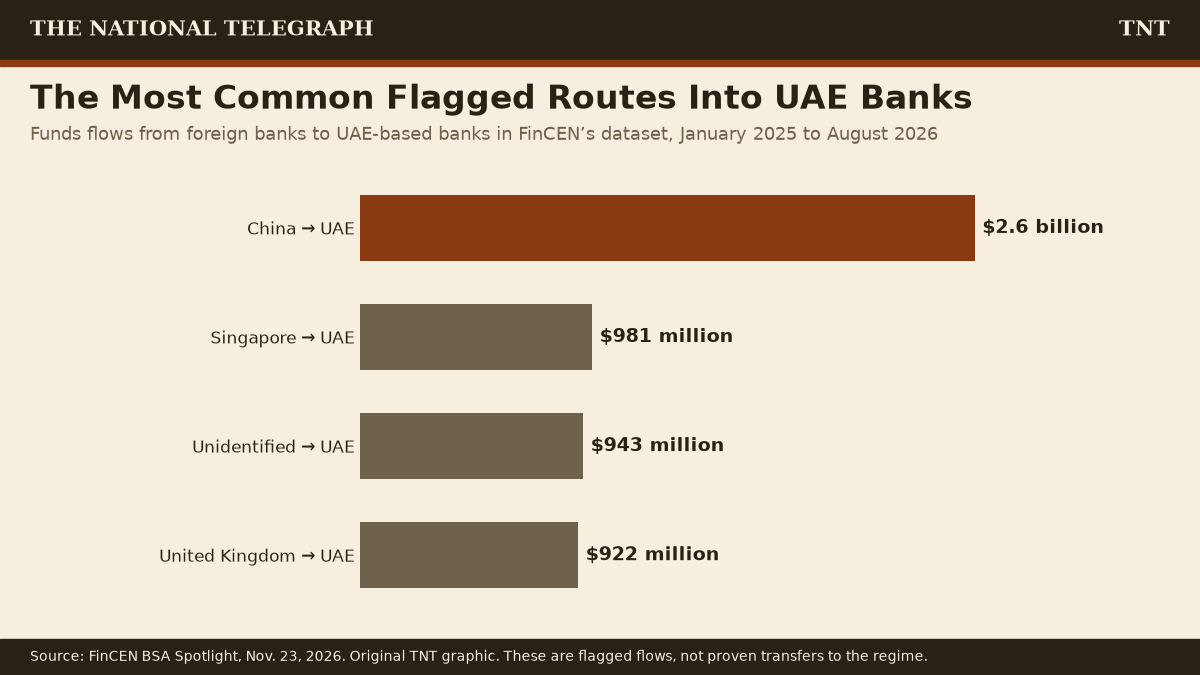
The activity, FinCEN said, remains concentrated in the United Arab Emirates, Hong Kong, and Singapore, and in businesses that include oil, shipping, investment, and technology procurement. The most common routes into UAE-based banks were about $2.6 billion from mainland China-based banks, about $981 million from Singapore-based banks, about $943 million from unidentified jurisdictions, and about $922 million from United Kingdom-based banks.
FinCEN said potential Iranian shadow banking “appears to have decreased by volume during the review period, which may be indicative of at least partial disruption of Iran’s ability to operate shadow banking networks.” That is the bureau’s assessment, not an independent audit of the regime’s books.
The Office of Foreign Assets Control added eight individuals and 22 entities to the Specially Designated Nationals and Blocked Persons List on Nov. 23, 30 names in all. Property of the designated people and companies that is in the United States or in American hands is blocked, and Americans are generally barred from dealing with them. The action is a different cut than Treasury’s Nov. 20 designations of four Iranian oil trustees, which The National Telegraph reported this week. Both were carried out under Operation Economic Outcast, announced by Secretary Bessent on Aug. 24, a day Treasury dubbed Economic D-Day.
Sources: U.S. Department of the Treasury, “Operation Economic Outcast Disrupts Iran’s Global Shadow Banking Networks” (sb0699, Nov. 23, 2026); U.S. Department of the Treasury, “Treasury Identifies Nearly $15 Billion in Potential Iranian Shadow Banking” (sb0698, Nov. 23, 2026); FinCEN, “Iranian Shadow Banking: Update on Trends in Bank Secrecy Act Data” (Nov. 23, 2026); OFAC Recent Actions and SDN List update, Nov. 23, 2026.

 November 24, 2026 November 24, 2026
Leave a Reply