[…] that some Democratic members had already called him. We covered why the Founders built that veto in “Mr. Veto”…

Written By TNT Staff, Posted on November 4, 2026
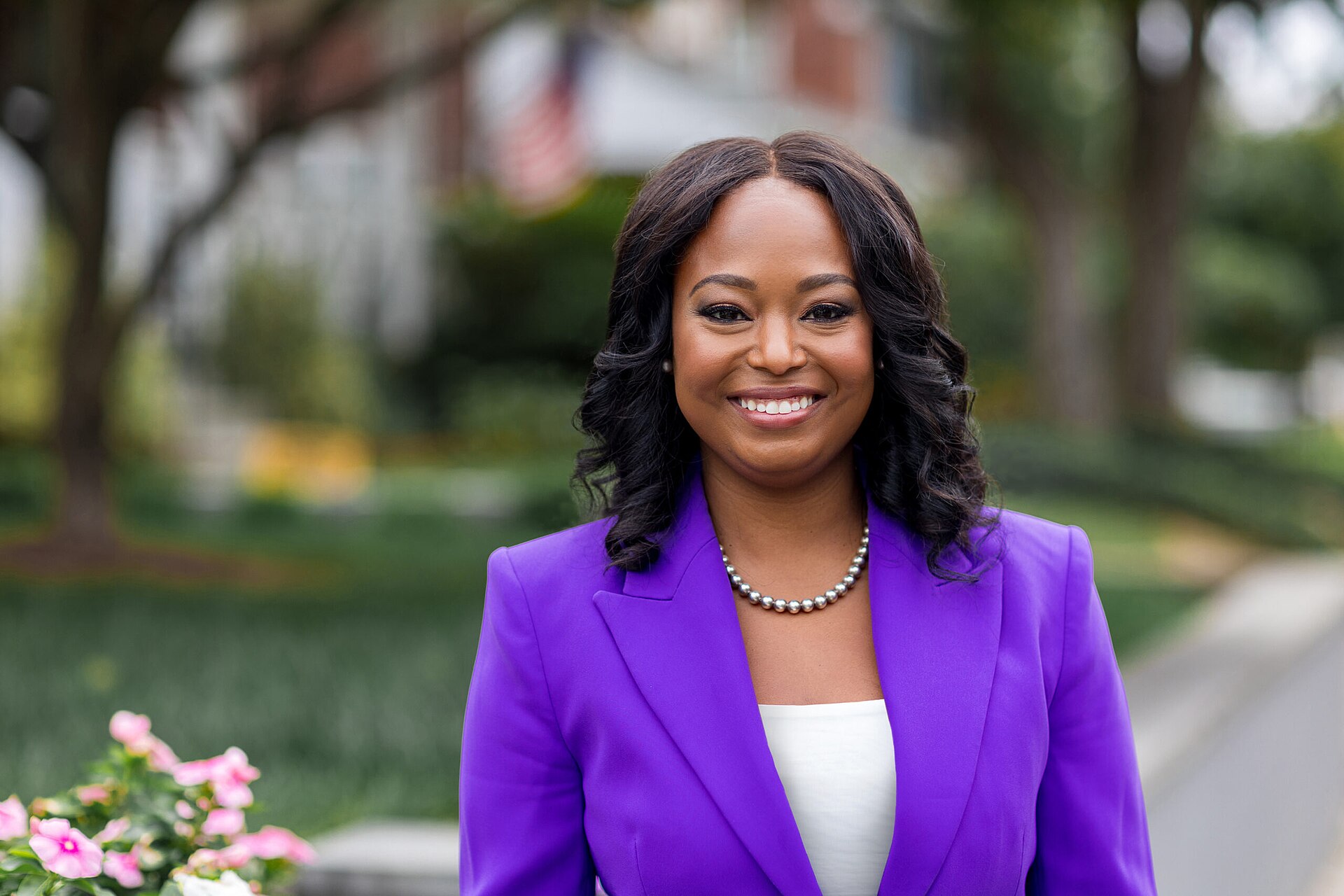
Washington, D.C., has its first democratic socialist mayor. Council member Janeese Lewis George won Tuesday with 126,932 votes, or 84.0%, according to the DC Board of Elections’ unofficial results. Independent Rhonda Hamilton took 10.3% and Statehood Green Robert L. Gross 3.6%. She succeeds Muriel Bowser on Jan. 2, 2027.
She was not alone. In Providence, 28-year-old democratic socialist David Morales won the mayor’s race, according to the AP. In New York’s 13th District, Darializa Avila Chevalier, who ousted Rep. Adriano Espaillat in June, was projected the winner by Decision Desk HQ.
We already covered why socialism keeps polling well with young voters. This piece asks a smaller question: what do her promises cost a city that is already short of money?
Her platform is more careful than the headlines. Her child care plan makes every family eligible for subsidy, with no family paying more than 7% of income. It is not free child care. Her transit plan makes buses free for residents on SNAP, not for everyone. Her housing plan would “strengthen and expand DC’s rent stabilization program” and build publicly owned housing.
The District’s own numbers are the problem. The Chief Financial Officer’s September 2026 revenue letter projects FY2027 local revenue of $11.04 billion, down $259.5 million from FY2026. The CFO blames slower corporate tax growth, weaker jobs and wages, and climbing office vacancies. Bowser’s FY2027 budget had to close a $1.1 billion gap.
Child care is already underfunded. The Council funded the subsidy at $153.2 million, which the DC Fiscal Policy Institute says is $23.9 million short of clearing today’s waitlist. The educator Pay Equity Fund got $73.5 million against the $94.2 million its backers want. Under 3 DC notes that the Council’s additions last one year and are not in the FY2028-2030 plan. Universal eligibility comes on top of all that. Nobody has published a price for it, and neither has her campaign.
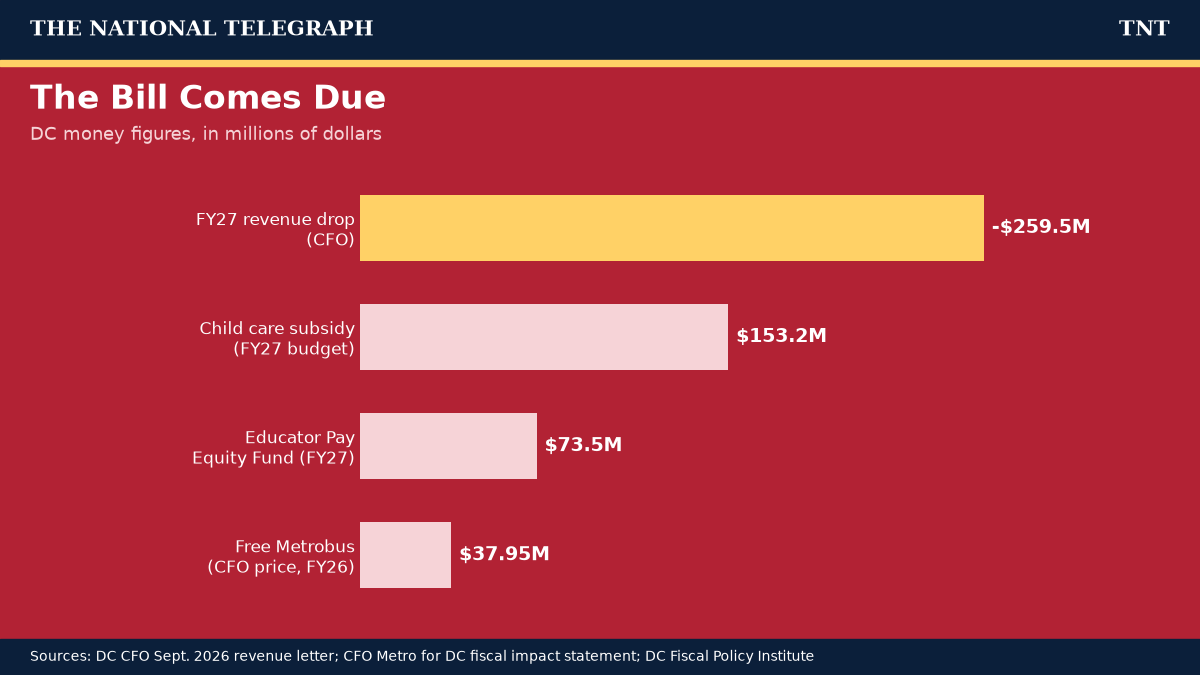
In 2022 the Council passed Metro for DC to make every Metrobus ride in the District free. The CFO’s fiscal impact statement priced the fares alone at $37.95 million for FY2026 and warned that funds were “not sufficient.” Revenue then fell and WMATA asked for a pause. WMATA’s own rider-data notes, written after June 2025, say implementation “was delayed indefinitely.” Those notes also say WMATA already runs Metro Lift, a fare program for SNAP recipients that has enrolled more than 13,000 riders.
Her narrower SNAP version would cover a large group. USDA counts 131,767 DC residents on SNAP as of June 2026. We found no official cost estimate. The CFO will need to score it.
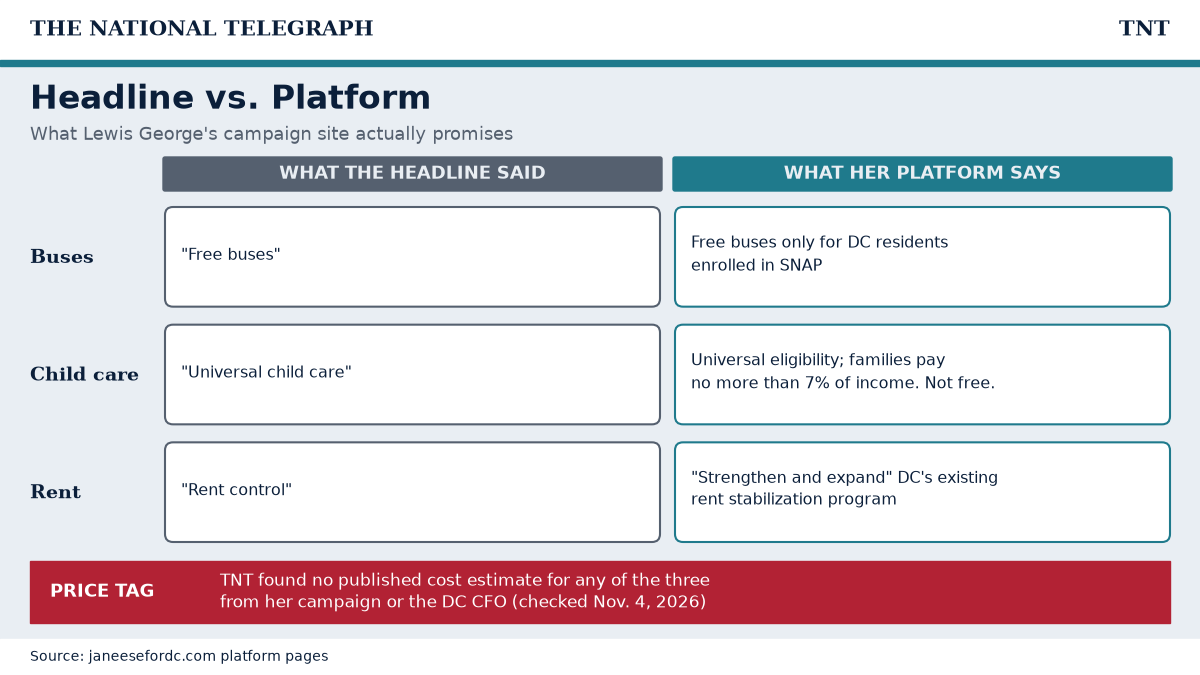
Rent control’s cost doesn’t show up as a budget line. It shows up as housing that never gets built. In a Stanford study of San Francisco published in the American Economic Review, landlords covered by rent control cut their rental supply by 15%. Citywide rents went up as a result. DC’s CFO is already reporting a weakening housing market.
Lewis George told 51st: “The intention is to do this without raising taxes on working people.” She pointed to “cutting budget waste” and “ending tax loopholes for big businesses.” Voters should ask for that plan in numbers before the first budget lands in the spring. DC’s last free-transit promise was priced, passed and then shelved because the money ran out. A city with falling revenue can’t run on good intentions.

 November 4, 2026
 November 4, 2026
Leave a Reply