[…] Every court said no. U.S. District Judge David Carter rejected the request first. Then a divided 9th Circuit panel…

Written By TNT Staff, Posted on November 3, 2026
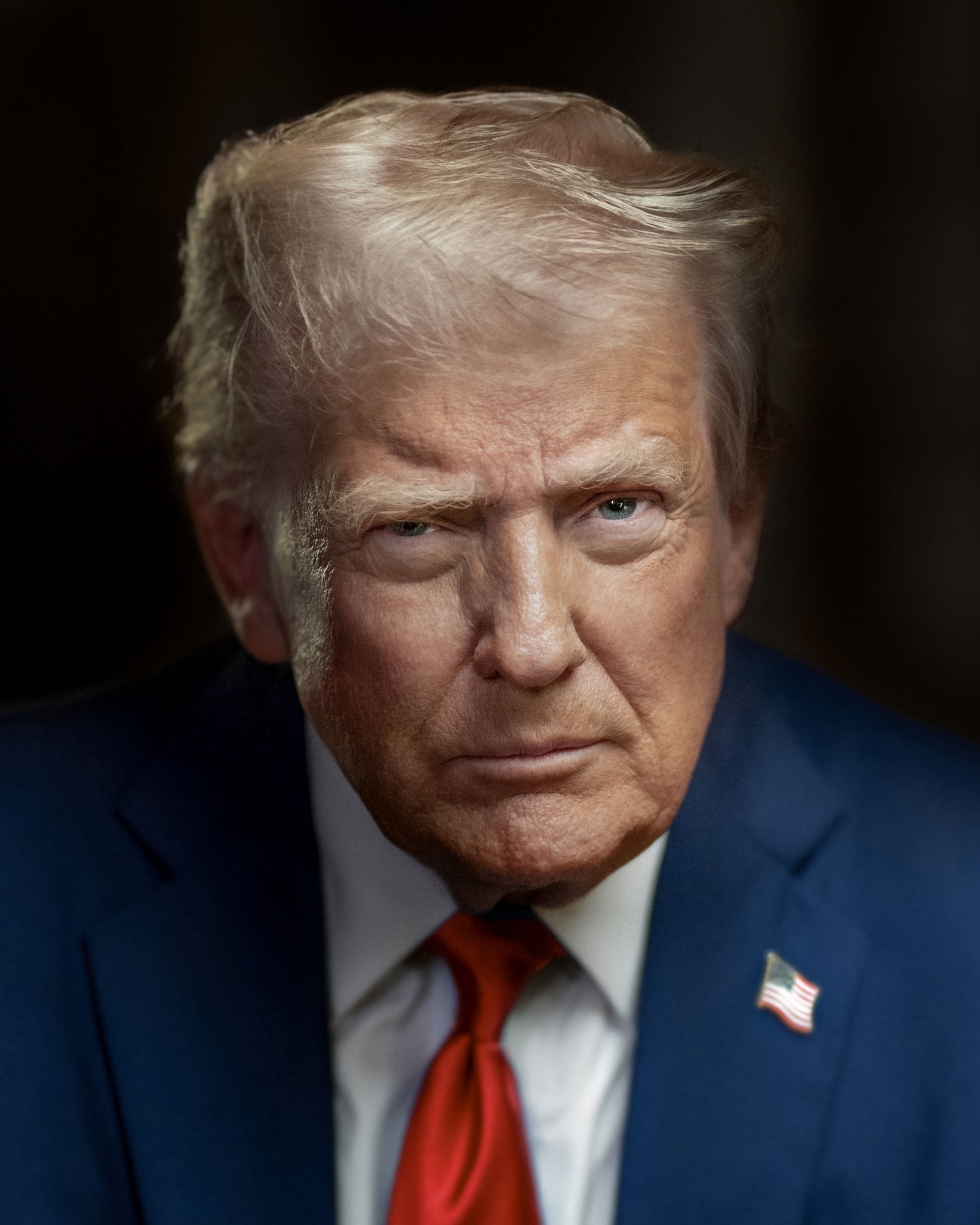
If Democrats take Congress today, President Trump already knows what he will do. “I guess I’ll become Mr. Veto,” he told Miranda Devine on the New York Post’s Pod Force One, the Post reported. “I’m not going to let them ruin it.”
He described the plan in plain terms: “They’ll be sending stuff up. You veto it. And eventually, after a month or two of getting all vetoed, they’re just wasting [time], they come over, and you make a deal.” He added, “if we didn’t win, I’d veto everything. I’ll be vetoing, vetoing.”
Critics will call that gridlock. The Founders called it the system working.
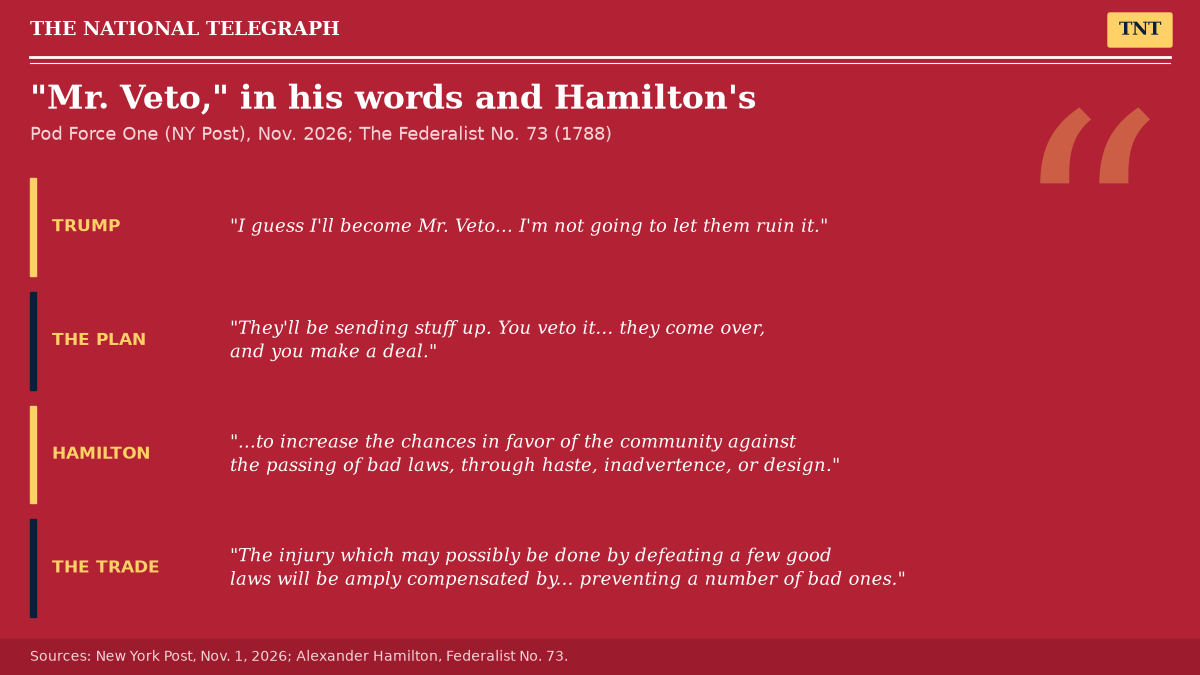
The Constitution gives the president a veto in Article I, Section 7. Congress can override it with a two-thirds vote in both chambers. Alexander Hamilton explained why in Federalist No. 73. The veto protects the executive, he wrote, and also serves “to increase the chances in favor of the community against the passing of bad laws, through haste, inadvertence, or design.”
Hamilton saw the cost coming and accepted it: “The injury which may possibly be done by defeating a few good laws will be amply compensated by the advantage of preventing a number of bad ones.”
That is the classical-liberal case for divided government. A law that has to get past a House, a Senate and a president who disagree is a law with broad support. A law that can’t get past them probably should not bind the whole country.
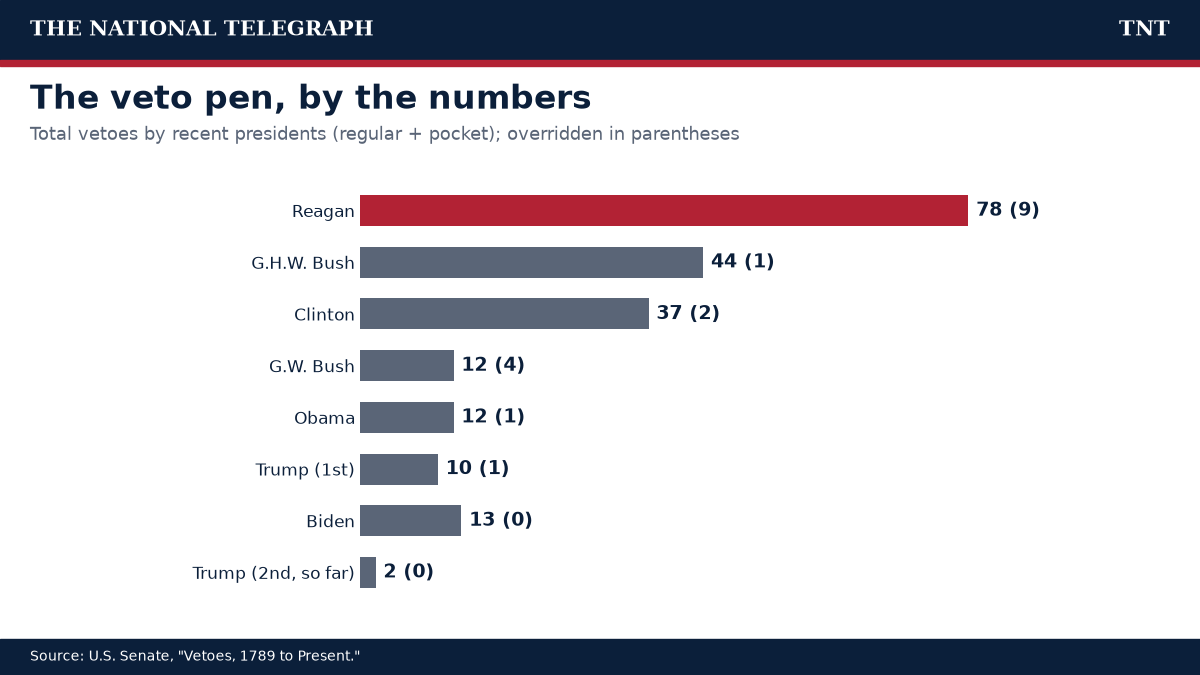
Trump has not leaned on the veto much in his second term. According to the U.S. Senate’s official tally, he has vetoed two bills, and the House sustained both in January. He vetoed 10 in his first term, and Congress overrode one of them. Biden vetoed 13 with no overrides. Obama vetoed 12.
Earlier presidents used the pen far more. Reagan issued 78 vetoes and George H.W. Bush issued 44, both while facing Democratic Houses. Clinton issued 37 after Republicans took Congress in 1994.
The Clinton years are the model Trump is describing. A president and a hostile Congress fought, and then made deals, including the 1996 welfare reform law and the 1997 balanced-budget deal, followed by federal surpluses from 1998 through 2001. Neither side got everything.
Being “Mr. Veto” only stops bills. It does not stop subpoenas, investigations or spending fights, and the Post notes Democrats have promised a flurry of investigations if they win either chamber. A veto also can’t fund the government on its own. Shutdown fights would still need a deal.
The bigger risk is the opposite of gridlock. Presidents of both parties have filled the space left by a stalled Congress with executive orders and emergency declarations. A veto is a check. Ruling by decree is not. If Trump means “Mr. Veto” to mean that Congress writes the laws and he says no to the bad ones, that’s the system the Founders built. If it turns into governing by pen and phone, it’s the habit conservatives spent the Obama years criticizing.
Democrats are favored to win the House, the Post reports, and the Senate is closer to a toss-up. By tomorrow we’ll know whether America gets to see the veto pen at work.

 November 3, 2026 November 3, 2026
Leave a Reply