[…] Trump also repeated claims about Kansas and Michigan races that fact-checkers have challenged. Those include an unsupported suggestion that…

Written By TNT Staff, Posted on October 27, 2026
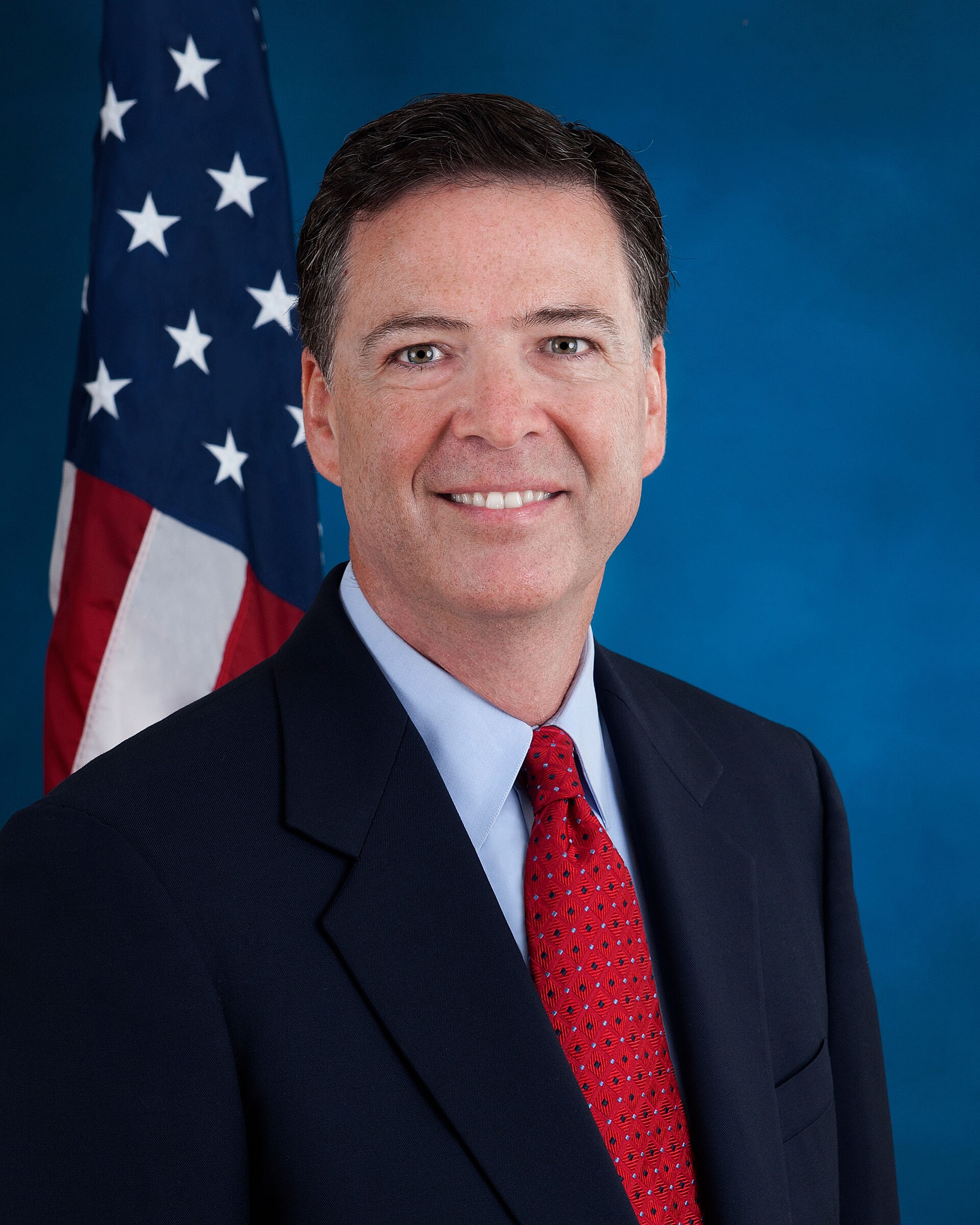
Featured photo: Official FBI portrait of James B. Comey as FBI director. Federal Bureau of Investigation, public domain, via Wikimedia Commons.
The Justice Department has charged former FBI Director James Comey a third time, and this time the case goes to the heart of how the bureau behaved in 2016.
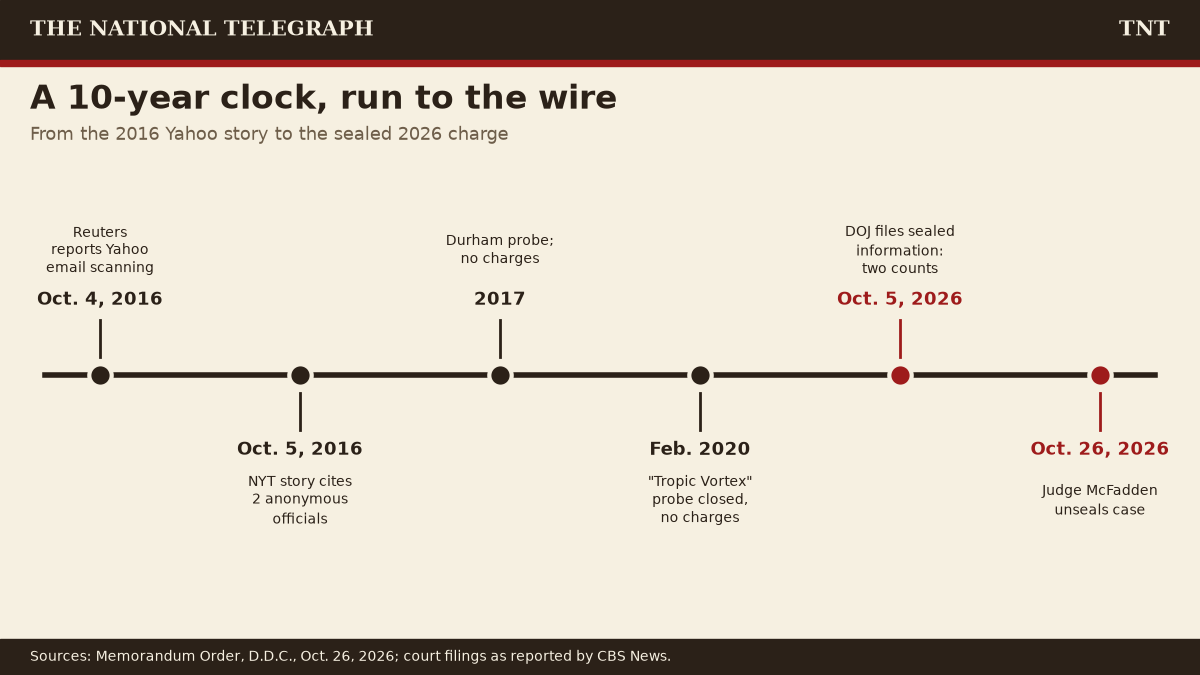
A federal judge in Washington, D.C., on Monday unsealed a criminal case that prosecutors quietly opened on Oct. 5. According to the memorandum order signed by U.S. District Judge Trevor N. McFadden, the government “filed a criminal information against James Brien Comey, Jr.” with two counts tied to “his alleged conduct on October 5, 2016, while he was director of the Federal Bureau of Investigation.”
Count I charges Comey with “transmitting a sensitive document related to the national defense to a person not entitled to receive it in violation of 18 U.S.C. § 793(d),” a section of the Espionage Act. Count II charges him with conspiring with “others known and unknown” to commit the first count. These are allegations. Comey has not been convicted of anything and is presumed innocent.
The order does not describe the leak itself. Court filings described by CBS News and the New York Times tie the case to an Oct. 5, 2016, Times article, “Yahoo Said to Have Aided U.S. Email Surveillance By Adapting Spam Filter,” which cited two unnamed government officials. According to CBS, the department alleges Comey wanted to “correct misinformation which had appeared in the press by way of Reuters the day before” and “directed staff” to talk to the Times reporter.
Prosecutors told the court the case was sealed because “[u]nindicted and unnamed co-conspirators appear” in the information, and that public notice “would risk compromising ongoing criminal and grand-jury investigations and could endanger cooperating witnesses,” the order says. By Monday the government no longer opposed unsealing. Judge McFadden, a Trump appointee, wrote that “[c]riminal charges against a former FBI director for his conduct while in office are of significant public interest,” and noted that Comey “has offered to ‘self-surrender.'” The judge has not ruled on Comey’s motion to dismiss.
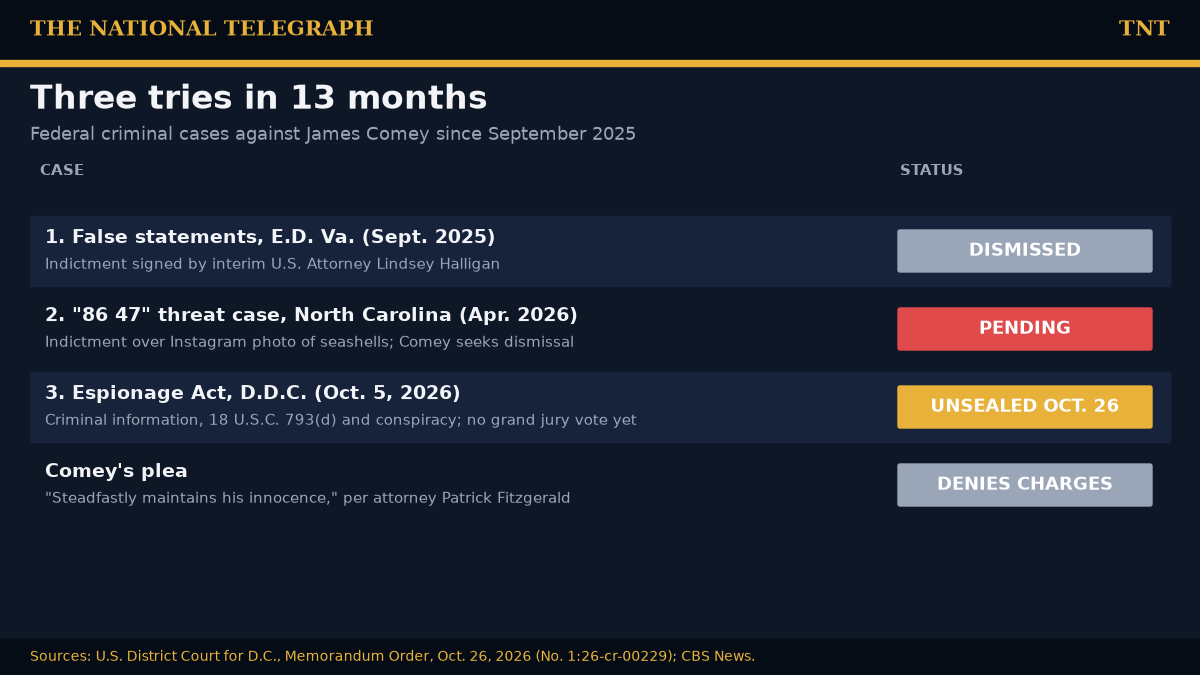
Fairness requires saying plainly where this case is vulnerable.
First, it is a criminal information, not an indictment. No grand jury has voted on these charges and no judge has found probable cause. A Justice Department spokesperson told CBS the information was filed “to preserve the statute of limitations before it expires.” The Espionage Act charge carries a 10-year limit, and prosecutors filed exactly 10 years after the alleged conduct. Comey’s lawyers argue that a sealed information cannot stop that clock for a felony that must be charged by indictment. The department says the law is satisfied when “the information is instituted.” That fight is the whole case for now.
Second, the leak has been investigated before. According to Comey’s filings as reported by CBS, John Durham looked at it in 2017 and recommended no charges, and a D.C. probe code-named “Tropic Vortex” closed in February 2020, also without charges. Comey’s attorney, Patrick Fitzgerald, said his client “steadfastly maintains his innocence.” Comey himself said, “well, they’re back again.”
Third, the record of this campaign against Comey is mixed. His September 2025 false-statements indictment in Virginia was thrown out because interim U.S. Attorney Lindsey Halligan was improperly appointed. His April 2026 North Carolina indictment over an Instagram photo of seashells spelling “86 47” is still pending, and Comey says it is vindictive.
None of that erases the underlying question. The FBI under Comey spent 2016 doing things no law enforcement agency should do in an election year, from the Clinton email press conference to the Crossfire Hurricane investigation the inspector general later picked apart. If a sitting FBI director had subordinates feed national defense information to a newspaper to win a news cycle, that is exactly the kind of conduct the Espionage Act is supposed to reach, and the same law has been used against far smaller fish.
But accountability that cuts corners is not accountability. A case built on a tolling maneuver that veteran prosecutors told CBS they had never seen, filed on the last possible day and kept secret for three weeks, hands Comey the martyr story he wants. Conservatives who spent years objecting to a weaponized FBI should insist this case clear the same bar we demanded of Comey: a grand jury, real evidence and a clean process. If the Justice Department has that evidence, it should take it to a grand jury now and let the facts, not the calendar, carry the case.

[…] Trump also repeated claims about Kansas and Michigan races that fact-checkers have challenged. Those include an unsupported suggestion that…
[…] TNT reported Oct. 15, Omar’s official birth year used to be 1981. Emails reported by the New York Post…

Very well presented. Every quote was awesome and thanks for sharing the content. Keep sharing and keep motivating others.
 October 27, 2026 October 26, 2026
Leave a Reply