[…] Trump also repeated claims about Kansas and Michigan races that fact-checkers have challenged. Those include an unsupported suggestion that…
Written By TNT Staff, Posted on October 24, 2026
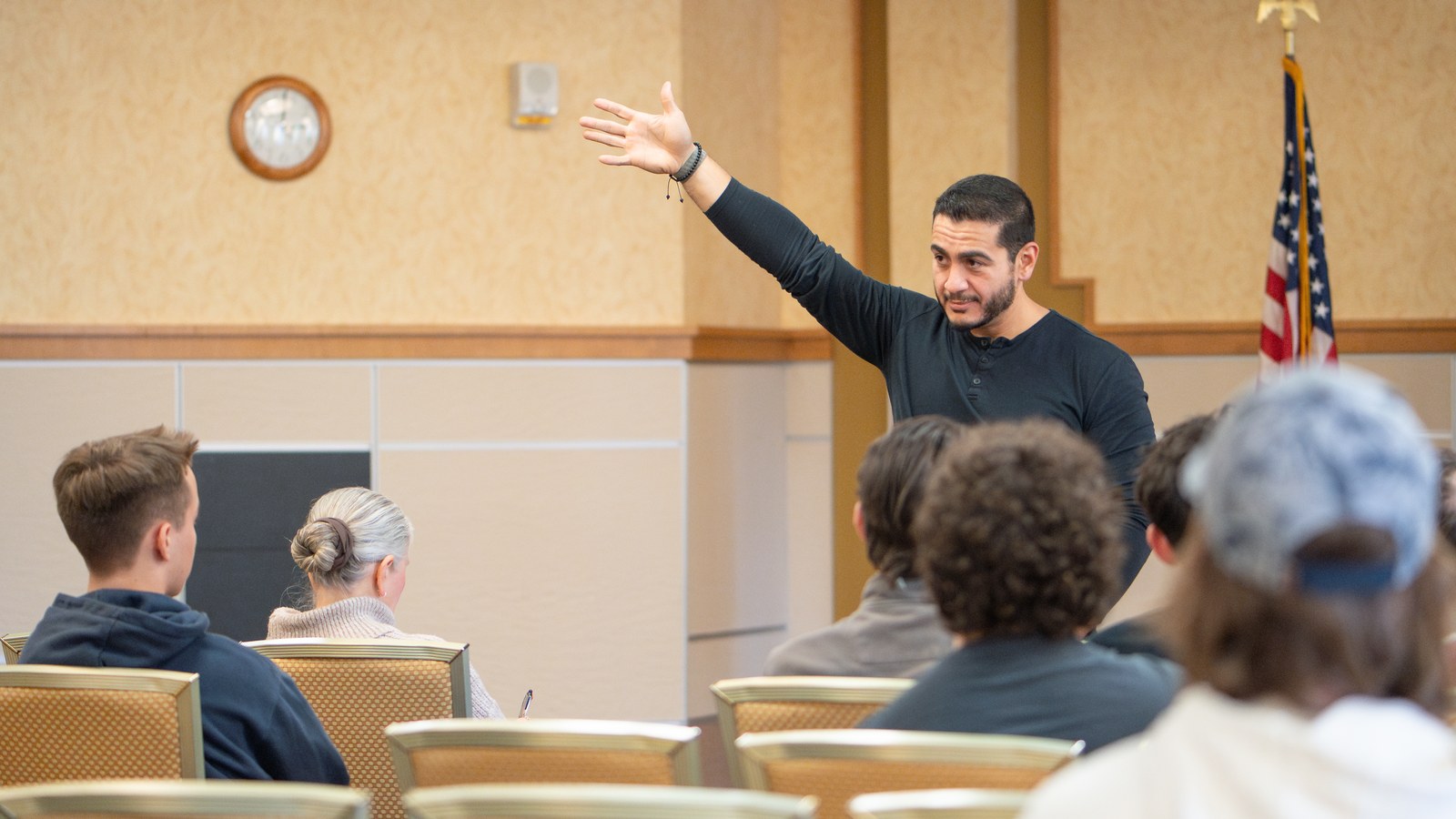
Featured photo: Abdul El-Sayed at a campaign meet-and-greet. Photo: Conlan Houston, CC BY-SA 4.0, via Wikimedia Commons.
Abdul El-Sayed, the Democratic nominee for U.S. Senate in Michigan, signed a 2012 statement that urged Egypt’s Muslim Brotherhood president, Mohamed Morsi, to “purge the media and the police as quickly as possible.” The New York Times has now confirmed he signed it. His campaign won’t explain why.
The Times reported that El-Sayed signed the letter while he was in medical school, and that “his campaign aides declined to answer questions about the 2012 letter,” according to an excerpt published by the NRSC, the Senate Republicans’ campaign arm.
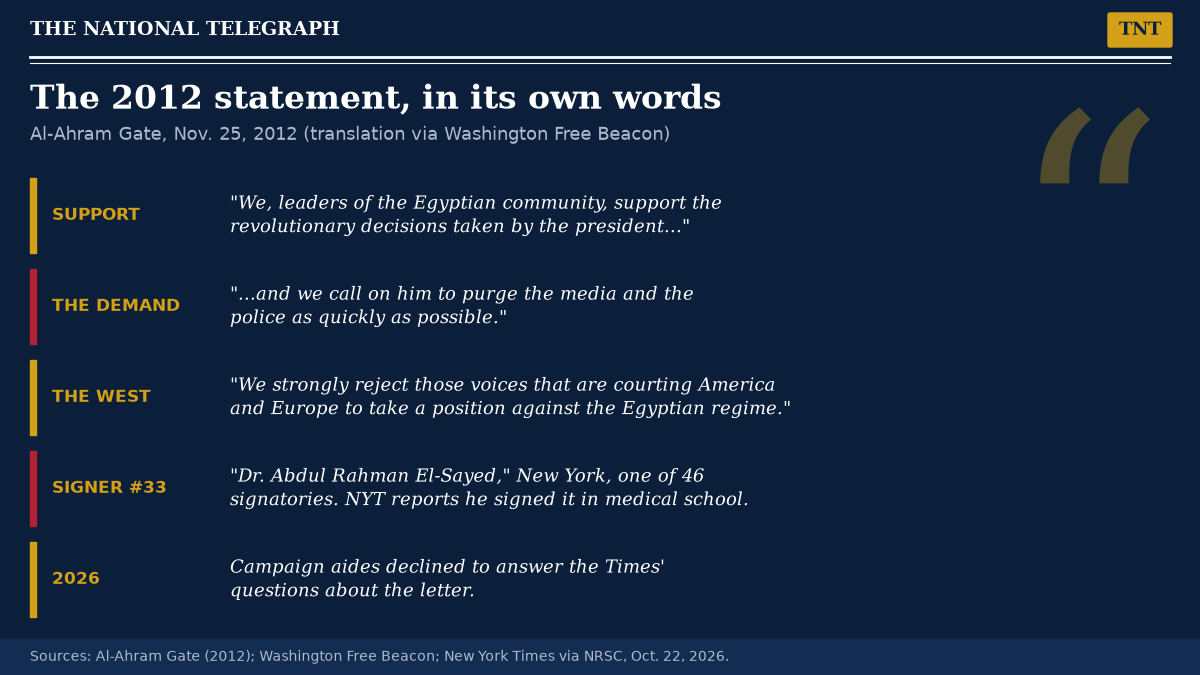
The statement appeared in Arabic on the Egyptian news site Al-Ahram Gate on Nov. 25, 2012, under a headline announcing that Morsi supporters in America backed his decisions. Forty-six self-described “leaders of the Egyptian community” in the United States signed it. The 33rd name was “Dr. Abdul Rahman El-Sayed” of New York, the Washington Free Beacon reported. El-Sayed, who was born in Michigan to Egyptian immigrants, was a Columbia medical student at the time.
“We, leaders of the Egyptian community, support the revolutionary decisions taken by the president, and we call on him to purge the media and the police as quickly as possible,” the statement reads, in the Free Beacon’s translation. The signers also wrote that they “strongly reject those voices that are courting America and Europe to take a position against the Egyptian regime.”
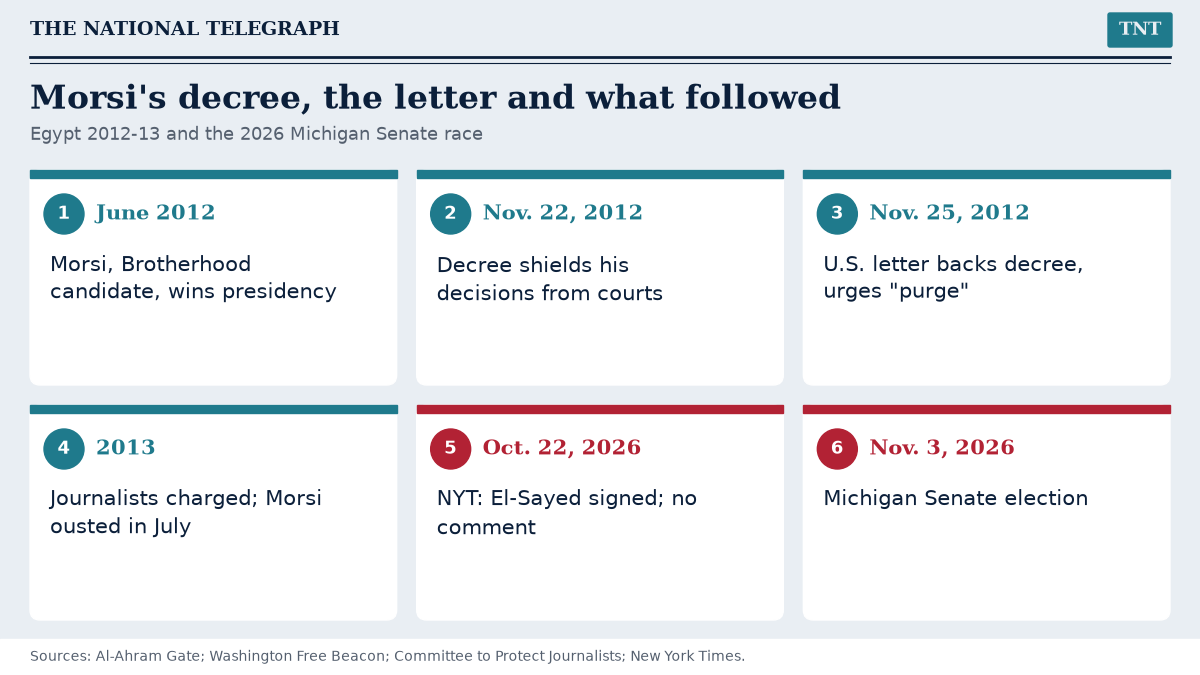
The timing matters. Three days earlier, on Nov. 22, 2012, Morsi had issued a constitutional declaration that put his decisions beyond the reach of Egypt’s courts. Critics across Egypt called it a power grab. Morsi came to power as the candidate of the Freedom and Justice Party, the Brotherhood’s political wing.
The letter didn’t just defend that decree. It asked him to go further, against the press. In the months that followed, Egyptian journalists were taken to court on charges of “insulting the president” and “insulting Islam,” as the Committee to Protect Journalists documented. Morsi was removed in July 2013.
The Times, for its part, notes that Morsi was Egypt’s first democratically elected president. It describes the letter as targeting supporters of the dictatorship toppled in the Arab Spring. But being elected doesn’t make it acceptable to call for a purge of the press.
El-Sayed has publicly disavowed the Muslim Brotherhood, and his campaign denies any connection to it. A September fact-check by Bridge Michigan found no evidence of ties to the group and concluded that signing the 2012 group letter did not amount to a pledge of support. Critics note that the fact-check did not deal with the call to purge the press.
The Free Beacon also reports that six other signers have donated to El-Sayed’s campaign. TNT has not independently checked those donations.
Disavowing an organization in general is easy. The question is about a specific document with his name on it, calling on a ruler to purge journalists and police. Michigan voters are entitled to ask him three things. Did he mean it? Does he still believe it? And if not, why won’t he simply say so?
Election Day is Nov. 3. So far, his campaign’s answer has been silence.

[…] Trump also repeated claims about Kansas and Michigan races that fact-checkers have challenged. Those include an unsupported suggestion that…
[…] TNT reported Oct. 15, Omar’s official birth year used to be 1981. Emails reported by the New York Post…

Very well presented. Every quote was awesome and thanks for sharing the content. Keep sharing and keep motivating others.
 October 24, 2026 October 24, 2026
Leave a Reply